
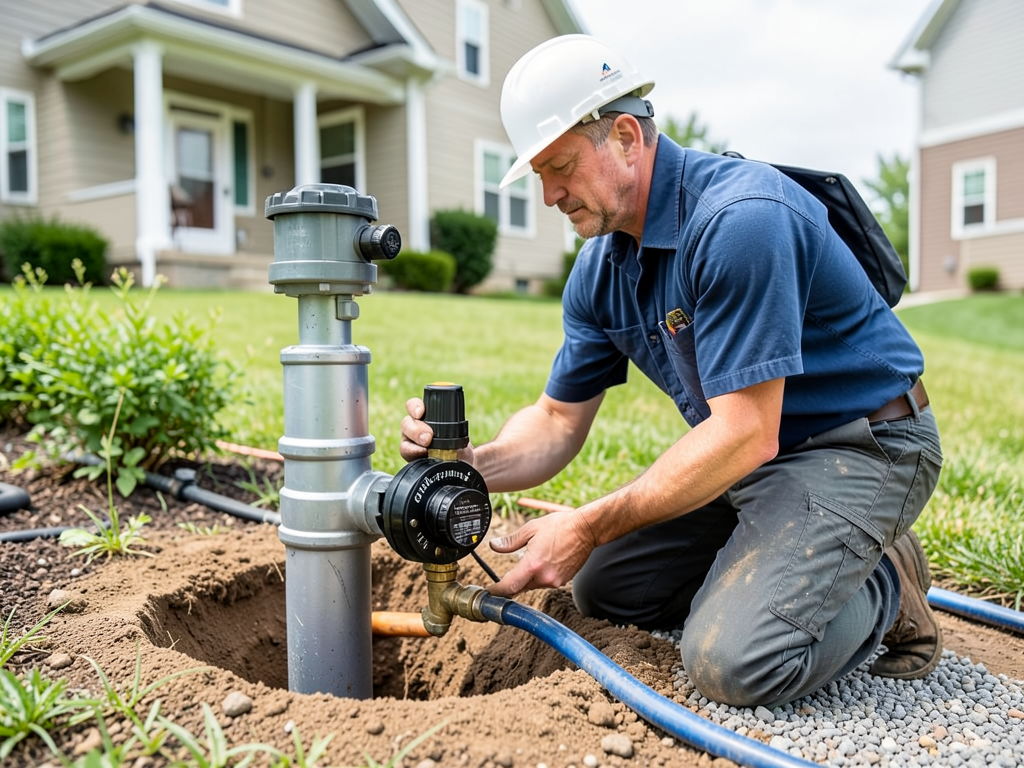
Liberty homeowners spend hundreds each year on sewer charges for water that never enters the sewer system. That’s the water you use to keep your lawn green, wash your car, or fill your pool. A secondary water meter, also called a deduct meter or irrigation meter, measures only the water that flows outside your home. Since that water doesn’t return to the sewer, you don’t pay sewer fees on it. This one-time installation can cut your annual sewer bill by 30% or more. Liberty Public Works Department.
Liberty operates under a volumetric sewer rate system. Every gallon you use is charged for both water and sewer service. But when you water your lawn, wash your car, or fill a pool, that water goes into the ground or evaporates. It never returns to the sewer system. A secondary meter tracks that outdoor use separately so you only pay for sewer service on the water that actually goes down the drain. Fix Your Overland Park Sewer Line Without Digging Up Your Entire Yard.
How a Secondary Meter Works in Liberty
A secondary meter is installed on the main water line before it enters your home. It measures all outdoor water use separately from indoor use. The primary meter inside your home continues to track all indoor water and sewer usage. The secondary meter typically connects to your irrigation system, outdoor spigots, or any other outdoor water source.
The secondary meter installation requires a backflow preventer to protect the public water supply from contamination. This device prevents water from flowing backward from your irrigation system into the clean water lines. Liberty’s Public Works Department requires this protection as part of their cross-connection control program.
Liberty Utility Requirements for Secondary Meters
Liberty’s Public Works Department oversees secondary meter installations. They require a plumbing permit before any work begins. The permit ensures the installation meets all local codes and includes proper backflow prevention. Liberty follows the International Plumbing Code with local amendments specific to Clay County soil conditions. Plumbing Gladstone.
The backflow preventer must be a reduced pressure zone (RPZ) valve. This is the highest level of protection available. Liberty requires annual testing of the RPZ valve by a certified tester. The test ensures the device is functioning properly and maintaining the required pressure differential.
Liberty accepts meters from approved manufacturers including Neptune, Sensus, and Badger. The meters must be lead-free and meet AWWA C700 standards for cold water service. The meter pit must be installed below the frost line, which in Liberty is typically 30 inches deep due to the region’s freeze-thaw cycles.
Cost Savings Breakdown for Liberty Homeowners
Liberty’s current sewer rate is $8.25 per 1,000 gallons. If you use 20,000 gallons per month during summer for irrigation, that’s $165 in sewer charges you don’t actually owe. A secondary meter tracks only the 5,000 gallons you use indoors, saving you $132 per month during peak season.
The installation cost typically ranges from $1,200 to $2,500 depending on your property layout and existing plumbing. This includes the meter, backflow preventer, permit fees, and installation labor. At $132 monthly savings during summer months, most homeowners break even within 12 to 18 months.
Liberty offers a sewer abatement credit program. Once your secondary meter is installed and inspected, you receive a credit on your sewer bill for the outdoor water usage. The credit appears as a separate line item showing the deducted gallons and corresponding sewer charge.
The Installation Process Step by Step
The installation begins with a site survey. A licensed plumber evaluates your water service line location, determines the best placement for the secondary meter, and checks for any obstacles like tree roots or existing utilities. They also verify your water pressure and flow rate to ensure proper meter sizing.
Next comes permit acquisition. Your plumber submits the permit application to Liberty Public Works, including meter specifications, backflow preventer details, and a site plan. The permit fee is typically $75 to $150. Liberty reviews the application to ensure compliance with local codes.
The physical installation involves shutting off your main water supply, cutting into the service line, and installing the secondary meter and backflow preventer. The plumber connects the secondary meter to your outdoor water lines and ensures all connections are watertight. They then pressure test the system before restoring water service.
Liberty requires a final inspection before the meter becomes active. A city inspector verifies the installation meets all code requirements and that the backflow preventer is properly installed. Once approved, the secondary meter begins recording outdoor water use separately from indoor use.
Backflow Prevention Requirements in Liberty
Liberty follows Missouri Department of Natural Resources regulations for backflow prevention. The RPZ valve must be tested annually by a certified tester. The tester submits the results to Liberty Public Works, who maintains a database of all tested devices. If your RPZ fails, you must repair or replace it within 30 days. Missouri Department of Natural Resources Cross Connection Control.
The RPZ valve creates a physical barrier between your irrigation system and the public water supply. It has two check valves and a relief valve that opens if either check valve fails. This three-stage protection prevents contaminated water from flowing backward into your home or the public system.
Liberty requires RPZ valves on all secondary meters because irrigation systems can contain fertilizers, pesticides, or bacteria. A backflow event could contaminate the entire water system. The annual testing requirement ensures these devices continue to provide the protection they were designed for.
Winterization and Maintenance Tips
Liberty’s freeze-thaw cycles can damage exposed plumbing components. Before the first hard freeze, typically in late November, you need to winterize your secondary meter system. This involves shutting off the water supply to the secondary meter and draining all water from the lines and backflow preventer. DIY vs. Professional Drain Cleaning.
Liberty Public Works recommends insulating the meter pit and backflow preventer with foam insulation. This provides additional protection during extreme cold snaps. Some homeowners install heat tape around the backflow preventer for extra protection.
Check your secondary meter reading monthly during the watering season. Compare it to your primary meter to ensure they’re both functioning properly. If you notice a sudden increase in either reading without increased usage, you may have a leak that needs immediate attention.
Liberty vs. Kansas City Water Services
Liberty’s secondary meter program differs from Kansas City Water Services. Liberty offers a direct sewer abatement credit for outdoor water use. Kansas City requires a separate irrigation meter and has different permit requirements through their Cross Connection Control Program.
Liberty’s program is simpler because it’s a smaller utility serving a single community. They process permits faster and have fewer bureaucratic layers. Kansas City’s larger system means longer wait times for permits and inspections.
Liberty’s sewer rates are slightly lower than Kansas City’s, making the payback period for a secondary meter more attractive. Liberty also has more flexible winterization requirements since their climate is similar but slightly milder than downtown Kansas City.
Common Questions About Secondary Meters
Many Liberty homeowners wonder if they really need a secondary meter. If you water your lawn regularly during summer months, the answer is likely yes. Even small lawns can use thousands of gallons monthly, and those gallons add up to significant sewer charges you don’t actually owe.
Another common question is about installation timing. Spring is the best time to install a secondary meter because you’ll maximize your savings during the upcoming watering season. However, installations can happen any time of year as long as the ground isn’t frozen.
Some homeowners worry about the appearance of additional plumbing components. Modern secondary meters and backflow preventers are compact and can be installed discreetly. Many installations are completely underground except for a small access box in your yard.
Financial Benefits Beyond Sewer Savings
A secondary meter provides data that helps you manage your water usage more effectively. You can see exactly how much water your lawn needs versus how much you’re actually using. This information helps you adjust your irrigation schedule for optimal efficiency.
During drought restrictions, some municipalities allow unlimited outdoor watering for homes with secondary meters because that water doesn’t impact the sewer system. While Liberty doesn’t currently offer this benefit, it’s worth checking with Public Works about any conservation incentives.
The secondary meter also protects you from rate increases. As sewer rates continue to rise, your savings from the secondary meter increase proportionally. If Liberty raises sewer rates by 10%, your monthly savings increase by 10% as well.
Choosing the Right Plumber for Installation
Liberty requires a licensed master plumber to install secondary meters. The plumber must be familiar with Liberty’s specific codes and permit requirements. They should also be certified to test and repair backflow preventers since annual testing is mandatory.
Look for a plumber who has installed multiple secondary meters in the Liberty area. They’ll understand the local soil conditions, frost line depth, and common installation challenges. Ask to see examples of their previous installations and verify their license status with the Missouri Department of Commerce and Insurance.
A good plumber will handle the entire process from permit application to final inspection. They should provide you with documentation of the installation, warranty information, and instructions for winterization and maintenance.
Environmental Benefits of Secondary Meters
Beyond the financial savings, secondary meters promote water conservation. When you can see exactly how much water you’re using outdoors, you tend to use it more wisely. Many homeowners find they can maintain healthy lawns while using 20-30% less water once they have data to guide their irrigation.
Liberty’s water system has limited capacity. By reducing the volume of water that needs treatment and pumping, secondary meters help the utility manage peak demand more effectively. This can delay expensive infrastructure upgrades that would ultimately be paid for by higher rates. Upgrade Your Prairie Village Home with a Professional Low-Flow Toilet Installation.
The reduced strain on Liberty’s water treatment plant also means lower energy consumption and fewer chemicals used in the treatment process. These environmental benefits add up across all the homes that install secondary meters.
Is a Secondary Meter Right for Your Liberty Home?
Consider a secondary meter if you have an irrigation system, water a significant lawn area, or use outdoor water regularly during summer months. If you only use outdoor water occasionally for car washing or garden hoses, the savings may not justify the installation cost.
Your property layout also matters. Homes with easy access to the main water line and space for a meter pit installation are ideal candidates. If your water line runs under a concrete driveway or requires extensive excavation, the installation cost may be higher.
Calculate your potential savings based on your actual water usage. Liberty Public Works can provide you with your historical water usage data. Look at your summer months when outdoor water use is highest to determine if a secondary meter makes financial sense for your household.
Next Steps to Get Started
The first step is contacting a licensed plumber who specializes in secondary meter installations in Liberty. They’ll assess your property, explain the process, and provide a detailed quote. Make sure they’re familiar with Liberty’s specific requirements and can handle the entire process from start to finish.
Once you decide to proceed, the plumber will handle permit acquisition and coordinate with Liberty Public Works for inspections. The entire process typically takes 2-4 weeks from initial contact to final inspection, depending on permit processing times and weather conditions.
Don’t wait until peak watering season to start this process. Installing your secondary meter in early spring ensures you’ll maximize your savings during the upcoming summer months when outdoor water use is highest.
Liberty’s Commitment to Water Conservation
Liberty Public Works actively promotes water conservation through their secondary meter program. They recognize that separating outdoor water use from sewer charges incentivizes efficient irrigation practices while ensuring the sewer system isn’t charged for water that never enters it.
The city provides educational resources about proper irrigation scheduling, leak detection, and water-efficient landscaping. These resources complement the secondary meter program by helping homeowners use water more wisely once they can track their outdoor usage separately.
Liberty’s approach balances the needs of homeowners who want healthy lawns with the city’s responsibility to maintain an efficient and cost-effective water and sewer system. The secondary meter program is a win-win that benefits both parties.
Making the Investment in Your Home
A secondary water meter is an investment in your Liberty home that pays for itself through reduced sewer bills. But the benefits extend beyond just monthly savings. You gain better control over your water usage, contribute to community water conservation efforts, and protect your home from potential rate increases.
The installation process is straightforward when handled by experienced professionals who understand Liberty’s specific requirements. With proper maintenance and annual backflow testing, your secondary meter will provide reliable service for many years.
Liberty homeowners who install secondary meters often wonder why they waited so long. The monthly savings, combined with the satisfaction of using water more efficiently, make this upgrade one of the most cost-effective home improvements available.
Take Control of Your Water Bills Today
Every month you wait to install a secondary meter is another month of paying sewer charges on water that never enters the sewer system. Liberty’s program makes it easy and affordable to separate your outdoor water use from your indoor usage.
Ready to start saving on your Liberty sewer bill? Call (816) 473-9233 today to schedule your secondary meter consultation. Our licensed plumbers have installed dozens of secondary meters throughout Liberty and understand all the local requirements. We’ll handle everything from permit acquisition to final inspection, ensuring your installation meets all Liberty codes and regulations.
Don’t let another summer go by paying for sewer service you don’t need. Pick up the phone and call (816) 473-9233 before the next watering season begins. Your lawn will thank you, and so will your wallet.
{
“@context”: “https://schema.org”,
“@type”: “BlogPosting”,
“headline”: “How a Secondary Water Meter Can Save You Money on Your Liberty Sewer Bill”,
“description”: “Learn how a secondary water meter installation in Liberty can help you avoid sewer charges on outdoor watering. Get the facts on local utility requirements and ROI.”,
“wordCount”: 2330,
“datePublished”: “2026-06-03T11:48:00.000Z”,
“dateModified”: “2026-06-03T11:48:00.000Z”,
“inLanguage”: “en-US”,
“mainEntityOfPage”: {
“@type”: “WebPage”,
“@id”: “https://silverlineplumbingkansascity.com”
},
“publisher”: {
“@type”: “LocalBusiness”,
“name”: “Silverline Plumbing Kansas City”,
“url”: “https://silverlineplumbingkansascity.com”
},
“author”: {
“@type”: “Organization”,
“name”: “Silverline Plumbing Kansas City”,
“url”: “https://silverlineplumbingkansascity.com”
},
“image”: {
“@type”: “ImageObject”,
“url”: “https://silverlineplumbingkansascity.com/wp-content/uploads/2026/03/how-a-secondary-water-meter-can-save-you-money-on-1.png”
}
}
{
“@context”: “https://schema.org”,
“@type”: “Plumber”,
“name”: “Silverline Plumbing Kansas City”,
“url”: “https://silverlineplumbingkansascity.com”,
“address”: {
“@type”: “PostalAddress”,
“addressLocality”: “Kansas City”
},
“areaServed”: {
“@type”: “City”,
“name”: “Kansas City”
}
}
{
“@context”: “https://schema.org”,
“@type”: “FAQPage”,
“mainEntity”: [
{
“@type”: “Question”,
“name”: “Is a Secondary Meter Right for Your Liberty Home?”,
“acceptedAnswer”: {
“@type”: “Answer”,
“text”: “Consider a secondary meter if you have an irrigation system, water a significant lawn area, or use outdoor water regularly during summer months. If you only use outdoor water occasionally for car washing or garden hoses, the savings may not justify the installation cost.”
}
}
]
}
{
“@context”: “https://schema.org”,
“@type”: “BreadcrumbList”,
“itemListElement”: [
{
“@type”: “ListItem”,
“position”: 1,
“name”: “Home”,
“item”: “https://silverlineplumbingkansascity.com”
},
{
“@type”: “ListItem”,
“position”: 2,
“name”: “Blog”,
“item”: “https://silverlineplumbingkansascity.com/blog”
},
{
“@type”: “ListItem”,
“position”: 3,
“name”: “How a Secondary Water Meter Can Save You Money on Your Liberty Sewer Bill”
}
]
}
{
“@context”: “https://schema.org”,
“@type”: “Service”,
“serviceType”: “Plumbing”,
“provider”: {
“@type”: “LocalBusiness”,
“name”: “Silverline Plumbing Kansas City”,
“url”: “https://silverlineplumbingkansascity.com”
},
“areaServed”: {
“@type”: “City”,
“name”: “Kansas City”
},
“description”: “Learn how a secondary water meter installation in Liberty can help you avoid sewer charges on outdoor watering. Get the facts on local utility requirements and ROI.”
}