Menu

Tank vs. Tankless Water Heaters in Kansas City – Compare Efficiency, Costs, and Performance for Your Home

Get the facts on storage and instantaneous water heaters, including how Kansas City's hard water and temperature swings affect each system's lifespan, energy bills, and daily hot water delivery.

Slider Image 1
Slider Image 2
Slider Image 3
Slider Image 4
Slider Image 5
Slider Image 7
Slider Image 8
Slider Image 9
Slider Image 10
Slider Image 11

Why Kansas City Homeowners Are Rethinking Water Heater Choices

Kansas City's hard water leaves scale deposits inside water heaters faster than most regions. Traditional tank water heaters accumulate sediment at the bottom, reducing efficiency and shortening lifespan. Tankless units face the same mineral buildup on heat exchangers, but the impact differs.

The city's temperature swings make this decision harder. Winter mornings can drop below freezing while summer days push past 95 degrees. A conventional water heater maintains a 40 to 50 gallon reserve, which means your system works constantly to keep water hot even when you are sleeping. An on-demand water heater only fires when you turn on a faucet, but Kansas City's incoming water temperature in January can be as low as 38 degrees. That cold supply water forces the unit to work harder to reach your desired temperature.

Most Kansas City homes were built with standard tank water heaters. Switching to a tankless system means evaluating your gas line capacity, electrical service, and venting requirements. If your home sits on clay soil common to the metro area, foundation shifts can stress rigid water and gas connections over time. A storage water heater replacement typically uses the same connections. A tankless installation often requires upgrades.

The tank vs tankless water heater comparison is not about which technology is universally better. It is about which system matches your household's hot water demand, your home's infrastructure, and your willingness to manage maintenance in an area where mineral content accelerates wear on both types of equipment.

Why Kansas City Homeowners Are Rethinking Water Heater Choices
How Each System Delivers Hot Water in Your Home

How Each System Delivers Hot Water in Your Home

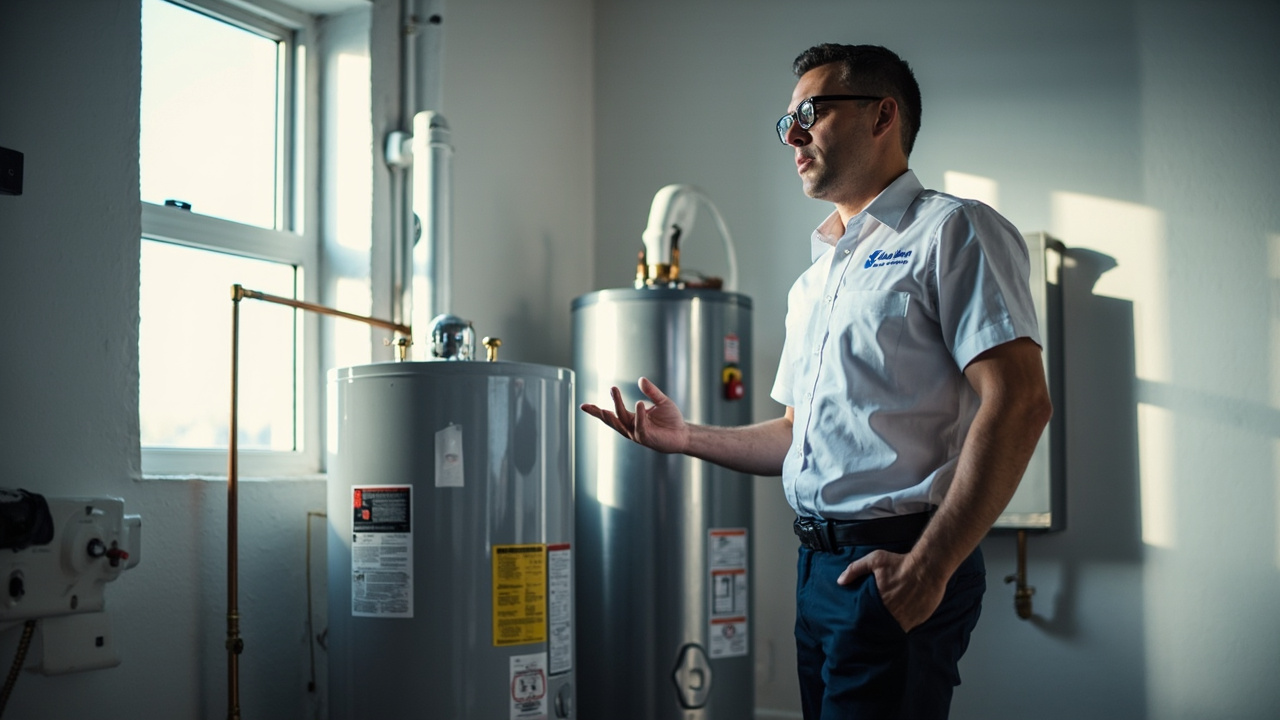
A traditional tank water heater stores water and maintains temperature through a thermostat-controlled burner or heating element. When you open a hot water tap, pressure pushes heated water out of the tank while cold water enters at the bottom. The burner cycles on to reheat the incoming water. Recovery rate determines how quickly the tank refills with hot water after heavy use. In Kansas City's hard water conditions, anode rods corrode faster, and sediment buildup reduces the tank's effective capacity over time.

An instantaneous water heater eliminates the storage tank. When you open a hot water tap, flow sensors detect water movement and ignite the burner. Water passes through a heat exchanger where temperatures rise rapidly before reaching your faucet. The system shuts off when you close the tap. Flow rate matters. If you run two showers and a dishwasher simultaneously, the unit must heat enough gallons per minute to supply all three fixtures. Undersized tankless units deliver lukewarm water during peak demand.

Kansas City's municipal water contains calcium and magnesium that form scale inside both systems. Tank water heaters dilute minerals across 40 to 50 gallons. Tankless heat exchangers concentrate minerals in a smaller space, requiring annual descaling with food-grade vinegar or citric acid solution. Skipping this maintenance reduces efficiency and can cause complete failure within five years.

Gas-fired tankless units require larger gas lines than standard tank heaters. Your home's existing half-inch line may need an upgrade to three-quarter inch to supply adequate BTU input. Electric tankless models demand dedicated 240-volt circuits, sometimes requiring a service panel upgrade. These infrastructure considerations affect installation costs and feasibility for older Kansas City homes.

What to Evaluate Before Choosing Your Water Heater

Tank vs. Tankless Water Heaters in Kansas City – Compare Efficiency, Costs, and Performance for Your Home
01

Calculate Hot Water Demand

Count the fixtures that might run simultaneously in your home. Showers use 2 to 2.5 gallons per minute. Washing machines use 2 gallons per minute. Dishwashers use 1.5 gallons per minute. Add these together during peak morning or evening hours. A tankless unit must match or exceed this total flow rate while raising Kansas City's incoming water temperature by 70 to 80 degrees. Undersizing causes temperature drops when multiple taps open.
02

Inspect Infrastructure Capacity

Check your gas line size, electrical panel amperage, and venting configuration. Tankless water heaters require larger gas supply lines and may need PVC or stainless steel venting instead of the standard B-vent used for tank heaters. Electric models demand 150 to 200 amps of dedicated service. Homes built before 1990 in Kansas City often need electrical upgrades. Your plumber should verify these requirements before recommending a system type.
03

Compare Long-Term Operating Costs

Storage water heaters cost less upfront but run constantly to maintain tank temperature, even when you are not using hot water. On-demand systems eliminate standby heat loss but require annual descaling service in Kansas City's hard water conditions. Calculate your household's daily hot water usage in gallons, then multiply by your natural gas or electric rate. Factor in maintenance costs for both systems over a 10 to 15 year lifespan to determine true cost of ownership.

Why Local Water Conditions Demand Specialized Knowledge

Kansas City Water Department supplies water with hardness levels ranging from 120 to 180 milligrams per liter. That concentration is classified as moderately hard to hard. Calcium carbonate precipitates out of solution when water heats above 140 degrees, forming scale inside tanks and heat exchangers. A plumber unfamiliar with this regional water chemistry may recommend equipment or maintenance schedules that fail prematurely.

Silverline Plumbing Kansas City installs and services both conventional and tankless systems across the metro area. We account for local water hardness when sizing equipment, selecting anode rod materials for tank heaters, and establishing descaling intervals for instantaneous units. Homes in older neighborhoods like Brookside or the Northland often have galvanized supply lines that introduce iron particles into the water. These particles accelerate sediment buildup in tank water heaters and clog inlet screens on tankless models.

Kansas City's building codes require thermal expansion tanks on closed-loop water systems. Many homes installed after 2000 have pressure-reducing valves that create closed systems. A water heater replacement without adding an expansion tank can void warranties and cause premature tank failure from pressure stress. We verify your system configuration during every installation.

The choice between storage and instantaneous water heaters depends on your household's specific conditions. A three-person household with staggered morning routines may function well with a tankless unit. A five-person family where everyone showers between 6:00 and 7:30 AM may need a larger conventional tank or multiple tankless units installed in parallel. We measure your actual hot water usage patterns before making equipment recommendations, ensuring the system matches your real-world demand rather than generic sizing charts.

What Happens During a Water Heater Evaluation

Same-Day Assessment Appointments

We schedule evaluations within 24 hours of your call. A technician arrives with flow meters, pressure gauges, and combustion analyzers to measure your current system's performance. The assessment takes 45 to 60 minutes and includes water hardness testing, gas line pressure testing for gas-fired systems, and electrical service verification for electric models. You receive a written comparison showing projected operating costs, installation requirements, and equipment options for both tank and tankless systems based on your home's actual conditions.

Transparent Equipment and Installation Pricing

We provide itemized quotes separating equipment costs from labor and material costs for any required infrastructure upgrades. If your home needs a larger gas line, dedicated electrical circuit, or venting modifications, these appear as separate line items with explanations of why the work is necessary. You see exactly what you are paying for before any work begins. We offer multiple equipment tiers at different price points so you can choose between basic, mid-range, and premium models based on your budget and feature preferences.

Code-Compliant Installation and Testing

Every installation meets Kansas City building codes and manufacturer specifications. We install thermal expansion tanks where required, upgrade venting to match the new unit's exhaust requirements, and pressure-test all connections before activation. Gas-fired systems undergo combustion analysis to verify proper air-fuel mixture and venting efficiency. We test temperature rise at multiple fixtures to confirm the system delivers your target hot water temperature during simultaneous use. You receive documentation of all testing results and code compliance.

Annual Maintenance Plans for Hard Water

Kansas City's mineral content requires proactive maintenance for both system types. We offer annual service plans that include sediment flushing for tank heaters or descaling for tankless units, anode rod inspection and replacement when needed, and combustion system cleaning. Regular maintenance extends equipment life by three to five years and maintains energy efficiency. Skipping annual service voids most manufacturer warranties. Our maintenance visits identify small issues like failing pressure relief valves or corroding dip tubes before they cause complete system failure and water damage.

Frequently Asked Questions

You Have Questions,
We Have Answers

What's better, a tank or a tankless water heater? +

It depends on your household needs and budget. Tank water heaters cost less upfront and handle simultaneous demand well, making them ideal for larger Kansas City families. Tankless units save space, last longer, and reduce energy bills by heating water on demand. However, they require higher initial investment and may need electrical upgrades. Kansas City homes with hard water may see mineral buildup in tankless models, requiring regular maintenance. Consider your hot water usage patterns, available space, and long-term savings goals. A professional assessment of your home's plumbing system helps determine the right fit.

What is the downside of a tankless water heater? +

Tankless water heaters have higher upfront costs, often two to three times more than tank models when factoring in installation and potential electrical panel upgrades. They struggle with simultaneous demand, meaning multiple showers or appliances running at once can overwhelm the system. Kansas City's hard water accelerates mineral buildup inside heat exchangers, requiring annual descaling to maintain efficiency. Flow rate limitations mean you may need multiple units for larger homes. Cold weather also affects performance, as incoming groundwater temperatures drop significantly during Kansas City winters, reducing the unit's heating capacity and efficiency.

Why do plumbers not recommend tankless water heaters? +

Many plumbers express concerns about tankless water heaters due to installation complexity and ongoing maintenance requirements. Retrofitting Kansas City homes often requires expensive electrical upgrades, gas line modifications, and venting changes. Hard water common in this area causes mineral scale buildup, leading to frequent service calls and customer complaints. Repair costs run higher because specialized parts and training are needed. Some plumbers also see inconsistent performance during peak demand times. Tank water heaters offer straightforward installation, familiar repair procedures, and reliable performance. These practical considerations make traditional tanks easier to install and service for many plumbing professionals.

How do amish get hot water? +

Amish communities typically heat water using wood-fired systems, propane, or solar thermal collectors. Many use a reservoir tank positioned near a wood stove, where water heats passively throughout the day. Some Amish homes feature outdoor wood boilers that heat water and circulate it indoors. Propane-powered instantaneous heaters are common in progressive Amish households. Solar batch heaters, which use black tanks in insulated boxes, provide hot water during warmer months. These methods align with Amish values of self-sufficiency and limited electrical grid dependence. The specific approach varies by community and individual family preferences.

Why do people still use tank water heaters? +

Tank water heaters remain popular because they cost less upfront, work reliably, and handle simultaneous hot water demands without issue. Kansas City families can run multiple showers, dishwashers, and washing machines at once without losing pressure or temperature. Installation is straightforward in most homes, requiring no electrical upgrades or complex venting modifications. Repairs are simple and affordable, with readily available parts and widespread plumber familiarity. The technology is proven and predictable. For households with high peak demand or limited installation budgets, tank water heaters deliver consistent performance without the complexity or maintenance demands of tankless systems.

What water heater do plumbers recommend? +

Plumbers typically recommend tank water heaters for most Kansas City homeowners due to lower costs, reliability, and easier maintenance. For standard family homes, a 40 to 50 gallon gas tank provides adequate hot water at a reasonable price point. Brands with strong warranty coverage and local parts availability get recommended most often. Tankless units make sense for smaller households, homes with space constraints, or customers prioritizing energy efficiency and willing to invest more upfront. The recommendation depends on your specific usage patterns, budget, home infrastructure, and maintenance willingness. A site evaluation determines which system suits your situation best.

How Kansas City's Hard Water and Clay Soil Affect Water Heater Performance

Kansas City sits on expansive clay soil that shifts with moisture changes. These movements stress rigid water and gas connections over years. Traditional tank water heaters use flexible supply lines that tolerate minor foundation movement better than the fixed connections required for some tankless installations. The metro's hard water accelerates anode rod depletion in tank heaters. Magnesium and aluminum anode rods typically last three to four years here compared to six to eight years in soft water regions. Tankless heat exchangers accumulate scale faster in hard water, reducing flow rate and temperature output. Annual descaling becomes mandatory rather than optional maintenance in this region.

Silverline Plumbing Kansas City understands these local conditions because we work exclusively in the metro area. We have installed and serviced water heaters in homes from Westport to Liberty, from Overland Park to Independence. We know which manufacturers build heat exchangers that resist Kansas City's mineral deposits better and which tank heater brands use thicker steel that withstands local water chemistry longer. That regional experience translates to equipment recommendations that match your specific location's water quality and your home's age and construction style. National chains and out-of-area contractors lack this granular local knowledge.
Plumbing Services in The Kansas City Area

We invite you to visit our location or view our extensive service area on the map below. Silverline Plumbing is proud to serve the entire Kansas City metro area, bringing our professional and trustworthy plumbing services to homes and businesses across the region. We are committed to being your neighborhood plumbers, always ready to respond to your call with speed and expertise, no matter where you are located.

Address:
Silverline Plumbing Kansas City, 131 E 39th St, Kansas City, MO, 64111

Additional Services We Offer

Our news updates

Latest Articles & News from The Blogs

Which Toilet Type Saves More on Your Kansas City Water Bill? Choosing between a dual flush and single flush toilet…

Dual Flush vs Single Flush — Which Toilet Saves the Most Money on Your KCMO Water Bill?

Which Toilet Type Saves More on Your Kansas City Water Bill? Choosing between a dual flush and single flush toilet…

How to Get Instant Hot Water to Your Master Suite in Leawood Without Wasting Gallons

How to Get Instant Hot Water to Your Master Suite in Leawood Without Wasting Gallons Waiting three minutes for hot…

Reverse Osmosis vs Whole House Filtration — Finding the Right Pure Water Solution in Liberty

Reverse Osmosis vs Whole House Filtration — Finding the Right Pure Water Solution in Liberty Homeowners in Liberty face a…

Contact Us

Call (816) 473-9233 now to schedule your water heater evaluation. We will measure your hot water usage, test your water hardness, and provide a clear comparison of tank and tankless options with honest cost projections for your specific home.