Menu

Commercial Water Heater Systems in Kansas City – Minimize Downtime with Industrial-Grade Hot Water Solutions

Silverline Plumbing Kansas City delivers large capacity water heaters engineered for high-demand operations, from multi-unit housing to manufacturing floors, with rapid deployment to keep your business running without interruption.

Slider Image 1
Slider Image 2
Slider Image 3
Slider Image 4
Slider Image 5
Slider Image 7
Slider Image 8
Slider Image 9
Slider Image 10
Slider Image 11

Why Commercial Hot Water Demands in Kansas City Require Industrial-Grade Systems

Kansas City's hard water, driven by high mineral content from the Missouri River watershed, accelerates sediment buildup in commercial grade water heaters. Calcium and magnesium deposits coat heating elements and tank interiors, reducing thermal efficiency and shortening equipment lifespan. For hotels along the Country Club Plaza, industrial laundries in the West Bottoms, or multi-family housing in Westport, this translates to rising energy costs and unexpected failures during peak occupancy.

Freeze-thaw cycles compound the problem. When winter temperatures drop below 20 degrees, commercial buildings with exposed service lines or inadequate insulation face rupture risk. A failed industrial water heater in a 200-unit apartment complex means tenant complaints, emergency hotel costs, and potential lease violations. Manufacturing operations in the Fairfax Industrial District cannot afford production stoppages because a 500-gallon storage tank went offline.

Commercial hot water systems require continuous output, not the intermittent use patterns of residential units. A restaurant in the Crossroads Arts District running three dishwashers during dinner service needs recovery rates that match demand, or service grinds to a halt. Healthcare facilities near the University of Kansas Medical Center must maintain 140-degree water for sanitization standards, which means redundant systems and fail-safe controls.

Large capacity water heaters in Kansas City must account for supply water entering the building at 50 degrees in winter and 70 degrees in summer. That temperature differential affects BTU calculations, recovery time, and whether a business can meet operational thresholds during the 6 a.m. to 10 p.m. rush window.

Why Commercial Hot Water Demands in Kansas City Require Industrial-Grade Systems
How We Size and Install Industrial Hot Water Systems for Maximum ROI

How We Size and Install Industrial Hot Water Systems for Maximum ROI

Silverline Plumbing Kansas City performs load analysis before recommending equipment. We measure peak draw rates, simultaneous fixture use, and temperature rise requirements. A 60-room hotel does not need the same recovery capacity as a 12-bay car wash. We calculate first-hour rating against your busiest operational windows to prevent undersizing, which causes complaints, and oversizing, which wastes capital and utility spend.

We specify tank materials based on your water chemistry. If your building sits on municipal supply with chloramine treatment, we recommend glass-lined tanks with powered anode rods to prevent premature corrosion. If you operate a well system in eastern Jackson County, we test for sulfates and adjust sacrificial anode specifications accordingly.

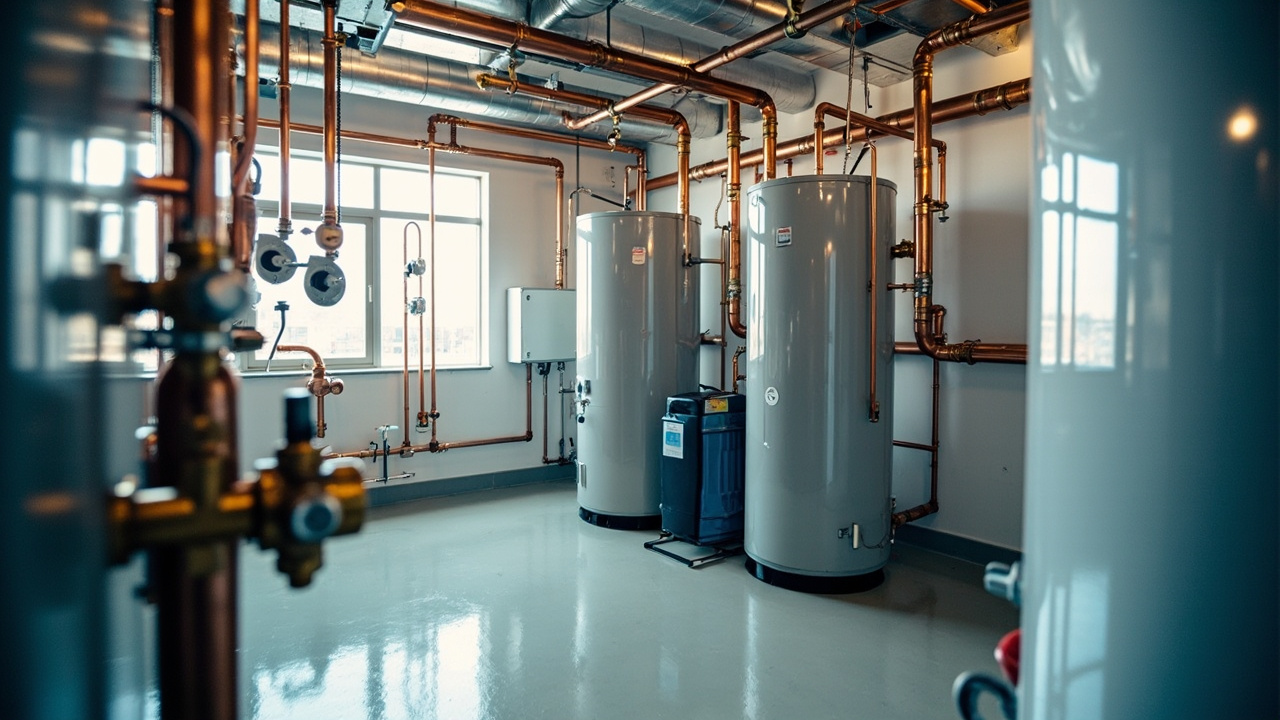
For industrial hot water systems requiring redundancy, we design parallel configurations with isolation valving. If one unit goes down for maintenance, the second maintains 70 percent capacity while we complete repairs. This approach works for hospitals, food processing plants, and any operation where hot water interruption triggers health code violations or production losses.

We integrate mixing valves and recirculation pumps to maintain consistent outlet temperatures across long pipe runs. A hotel with guest rooms 200 feet from the mechanical room cannot rely on passive convection. We install variable-speed circulators with aquastats to reduce parasitic heat loss and keep return water above 120 degrees, which minimizes Legionella risk and eliminates the 90-second wait time guests complain about.

Installation includes expansion tank sizing, backflow prevention per Kansas City code, and seismic restraint anchoring. We pull permits, coordinate inspections, and provide as-built documentation for your facility management team.

What Happens When You Contract for a Commercial Water Heater Replacement

Commercial Water Heater Systems in Kansas City – Minimize Downtime with Industrial-Grade Hot Water Solutions
01

Site Assessment and Load Calculation

We audit your existing system, measuring incoming water temperature, current fixture count, and peak demand periods. We review utility bills to identify inefficiencies and calculate your actual first-hour rating needs. If you are expanding operations or adding equipment, we factor future load into the sizing model to prevent premature obsolescence.
02

Equipment Selection and Staging

We match equipment to your operational schedule, selecting gas-fired, electric, or hybrid models based on utility rate structures and venting constraints. For tight mechanical rooms, we specify vertical flue configurations. We coordinate delivery and crane access if rooftop installation is required, scheduling work during your lowest-traffic windows to avoid revenue disruption.
03

Commissioning and Performance Testing

After installation, we test outlet temperatures under simulated load, verify thermostat accuracy, and calibrate mixing valves. We train your maintenance staff on drain-flush intervals, anode rod inspection, and emergency shutoff procedures. You receive a commissioning report with baseline efficiency metrics and a recommended service interval based on your water quality.

Why Kansas City Businesses Choose Local Expertise for Critical Hot Water Infrastructure

Kansas City's plumbing code adopts the International Plumbing Code with local amendments enforced by the Codes Administration Office. Commercial grade water heaters require permits, pressure relief valve testing per ASME standards, and seismic bracing in mechanical rooms. A contractor unfamiliar with these requirements causes inspection failures and project delays that cost you money.

We maintain relationships with inspectors in Kansas City, North Kansas City, and surrounding municipalities. We know which AHJs require backflow assemblies on recirculation loops and which allow thermal expansion tanks in lieu of pressure-reducing valves. This local knowledge eliminates change orders and keeps projects on schedule.

Industrial water heaters generate condensate that must be neutralized before discharge into municipal sewer systems. Kansas City's Water Services Department enforces pH limits, and violations trigger fines. We install condensate neutralizer kits sized to your equipment's BTU output, ensuring compliance without callbacks.

Silverline Plumbing Kansas City stocks parts for commercial units from Bradford White, A.O. Smith, and Rheem. When a gas valve fails at a Lee's Summit hotel on a Friday afternoon, we have the replacement in our truck, not on backorder in a regional warehouse. Downtime equals lost revenue, and we structure our inventory around that reality.

We also understand Kansas City's commercial real estate landscape. A mixed-use building in the River Market has different hot water needs than a warehouse in the Berkley Riverfront. We have installed systems in LEED-certified buildings requiring specific efficiency thresholds and in historic renovations where space constraints demand creative solutions.

What to Expect When You Upgrade Your Commercial Hot Water System

Installation Timeline and Business Continuity

Most commercial water heater replacements take one to three days, depending on system complexity and permit approval times. We schedule work around your peak business hours. For hotels and healthcare facilities that cannot shut down hot water, we stage installations to maintain partial capacity throughout the process. If your operation requires uninterrupted service, we bring temporary rental units to bridge the gap. We coordinate with your management team to minimize tenant or customer impact.

Pre-Installation Evaluation and Specifications

We conduct a walkthrough to assess venting paths, gas line capacity, and electrical service. We measure door widths and ceiling heights to confirm equipment fit before ordering. If your building requires a larger unit than the existing infrastructure supports, we provide a scope of work for utility upgrades, including gas meter upsizing or electrical panel modifications. You receive a detailed proposal with equipment specifications, labor breakdown, and permit costs before any work begins.

Performance and Efficiency Outcomes

Modern commercial hot water systems deliver thermal efficiencies above 90 percent, compared to 60 percent for aging atmospheric units. You see this improvement in lower gas bills within the first billing cycle. Condensing models capture exhaust heat that older units vent outdoors, recovering BTUs that previously went to waste. For high-volume users, this efficiency gain pays for the equipment upgrade in 24 to 36 months through reduced operating costs and fewer emergency repairs.

Maintenance Plans and Long-Term Support

We offer annual maintenance contracts that include tank flushing, anode rod inspection, burner cleaning, and flue gas analysis. Regular service extends equipment life and prevents failures during peak demand periods. Maintenance visits also catch small issues before they become expensive problems, like a failing gas valve or corroded dip tube. Contract customers receive priority scheduling and discounted labor rates on repairs. We maintain service records for warranty compliance and provide documentation for insurance and facility audits.

Frequently Asked Questions

You Have Questions,
We Have Answers

Is there a difference between commercial and residential water heaters? +

Yes. Commercial water heaters are built for high-demand operations like restaurants, hotels, and manufacturing facilities. They feature larger capacities (typically 75 to 250 gallons), faster recovery rates, and heavier-duty components to handle continuous use. Commercial units often require three-phase electrical connections or high-BTU gas lines. They meet stricter building codes for safety and efficiency. Residential units serve single-family homes with lower daily usage and smaller tank sizes (30 to 80 gallons). In Kansas City, commercial installations must comply with local codes regarding venting, seismic restraints, and backflow prevention. The cost difference reflects these durability and capacity requirements.

How much to install a 100 gallon commercial water heater? +

Installation costs depend on fuel type, location access, and existing infrastructure. Gas units require proper venting and gas line upgrades. Electric models need adequate electrical service and panel capacity. Many Kansas City commercial buildings require structural reinforcement for tank weight and additional code-compliant safety features like expansion tanks, pressure relief piping, and seismic straps. Older buildings downtown or in historic districts may need additional modifications for code compliance. Labor costs vary based on accessibility, weekend or after-hours scheduling to minimize business disruption, and permit requirements. Focus on total cost of ownership including energy efficiency ratings rather than installation price alone.

What are the 4 types of water heaters? +

The four main types are storage tank, tankless (on-demand), heat pump, and indirect water heaters. Storage tank systems hold heated water in insulated tanks and dominate commercial installations for reliability and high-volume output. Tankless units heat water as it flows through, saving space but requiring significant gas or electrical capacity. Heat pump models extract heat from surrounding air, offering efficiency but slower recovery. Indirect systems use your boiler to heat water through a heat exchanger. Kansas City commercial facilities typically choose storage tanks for predictable performance or hybrid systems combining tankless with recirculation loops for immediate hot water delivery across large buildings.

What is the life expectancy of a commercial water heater? +

Commercial water heaters typically last 10 to 15 years with proper maintenance. Lifespan depends on water quality, usage intensity, and maintenance schedules. Kansas City's moderately hard water (7 to 10 grains per gallon) accelerates sediment buildup and anode rod depletion, reducing tank life without regular flushing. High-demand facilities like laundromats or car washes may see shorter lifespans due to constant cycling. Gas models often outlast electric units due to simpler components. Budget for replacement before failure to avoid business disruption. Regular inspections, annual flushing, and anode rod replacement every three to five years maximize your investment and prevent unexpected downtime.

Why do plumbers not recommend tankless water heaters? +

Plumbers recognize tankless limitations in commercial settings. They require substantial gas line upgrades (up to 1-inch diameter) or dedicated 150 to 200-amp electrical circuits, which many Kansas City buildings cannot accommodate without costly electrical service upgrades. Simultaneous demand from multiple fixtures causes temperature fluctuations. Hard water scaling damages heat exchangers, requiring annual descaling maintenance. Repair costs exceed tank-type units due to complex electronics and proprietary parts. For commercial operations, tankless models work best as point-of-use supplements rather than whole-building solutions. Storage tank systems deliver predictable performance and simpler repairs. ROI calculations often favor traditional tanks for high-volume commercial applications.

What is the $5000 AC rule? +

This refers to a depreciation rule under IRS Section 179, not an HVAC-specific regulation. The rule allowed businesses to immediately expense qualifying equipment purchases rather than depreciating over time. The threshold changed multiple times. For water heaters, Section 179 and bonus depreciation provisions let Kansas City businesses deduct qualifying commercial equipment in the purchase year, improving cash flow. Consult your tax advisor about current limits and eligibility. Energy-efficient commercial water heaters may qualify for additional deductions under Section 179D for building system improvements. This tax strategy reduces effective equipment cost but requires proper documentation and compliance with IRS equipment specifications.

Are there tax credits for new water heaters? +

Yes. The federal Energy Efficient Home Improvement Credit offers up to $2,000 for qualifying high-efficiency water heaters under the Inflation Reduction Act. Commercial properties may qualify for Section 179D deductions for energy-efficient building systems. Gas models need a Uniform Energy Factor of 0.81 or higher. Heat pump water heaters must meet ENERGY STAR criteria. Kansas City commercial property owners should verify eligibility with tax professionals, as credits phase in through 2032 with changing thresholds. Utility rebates from Kansas City Power and Light or Spire Energy may stack with federal credits. Document model numbers and efficiency ratings for tax filing. ROI improves significantly when combining credits with lower operating costs.

Are commercial water heaters worth it? +

For commercial operations, absolutely. They deliver consistent hot water volumes necessary for business continuity. The upfront cost is offset by durability, code compliance, and predictable performance. Downtime from undersized or failing residential-grade units costs Kansas City businesses far more than proper commercial equipment. Commercial models feature serviceable components, reducing total replacement frequency. They meet health department requirements for restaurants and hospitality businesses. Liability protection alone justifies the investment. Choose capacity based on peak demand plus 25 percent buffer. Factor in recovery rate for continuous operations. Calculate total cost of ownership over 12 years including energy consumption, maintenance, and business interruption risk. Commercial-grade equipment protects revenue.

How often should a commercial water heater be flushed? +

Flush commercial water heaters every six to 12 months depending on usage intensity and water hardness. Kansas City's water supply contains minerals that settle as sediment, reducing efficiency and tank life. High-volume operations like restaurants or hotels need quarterly flushing. Sediment buildup insulates the tank bottom from the burner, wasting energy and causing premature failure. Flushing involves draining several gallons until water runs clear, removing accumulated scale. Schedule during slow business periods to minimize disruption. Combine flushing with anode rod inspection. Hard water areas may need more frequent service. Consistent maintenance preserves warranty coverage and prevents costly emergency replacements during peak business hours.

What water heater do plumbers recommend? +

Plumbers recommend brands based on application requirements, not universal preferences. For commercial installations, A.O. Smith, Bradford White, and Rheem dominate due to parts availability and service network coverage in Kansas City. Choose models with accessible components, non-proprietary parts, and local warranty service. Specify commercial-grade construction with thicker tank walls and longer warranty coverage. Match capacity to peak demand calculations, not guesswork. Gas models with power venting offer flexible installation in buildings lacking traditional chimneys. Prioritize recovery rate for continuous operations. Select ENERGY STAR rated units for rebate eligibility. Your plumber should provide load calculations specific to your business type and usage patterns before recommending capacity and fuel type.

How Kansas City's Hard Water and Cold Winters Accelerate Commercial Water Heater Degradation

Kansas City's water supply averages 10 to 15 grains per gallon of hardness, classified as hard to very hard by the Water Quality Association. This mineral load deposits scale inside heat exchangers and storage tanks, reducing heat transfer and forcing burners to work harder. Over time, sediment accumulates at the bottom of the tank, creating hot spots that weaken steel and lead to leaks. Cold supply water entering the building at 45 to 50 degrees in January also forces industrial hot water systems to work at maximum output for extended periods, accelerating component wear and increasing the likelihood of mid-season breakdowns.

Silverline Plumbing Kansas City has installed large capacity water heaters in commercial properties across the metro, from the Power and Light District to the Kansas City International Airport corridor. We know which buildings in the West Bottoms flood zone require floor drains and sump pumps in mechanical rooms, and we understand the venting limitations in older warehouse conversions downtown. Local expertise means we anticipate permitting requirements, navigate utility coordination, and deliver systems that comply with Kansas City's commercial building standards without costly do-overs.
Plumbing Services in The Kansas City Area

We invite you to visit our location or view our extensive service area on the map below. Silverline Plumbing is proud to serve the entire Kansas City metro area, bringing our professional and trustworthy plumbing services to homes and businesses across the region. We are committed to being your neighborhood plumbers, always ready to respond to your call with speed and expertise, no matter where you are located.

Address:
Silverline Plumbing Kansas City, 131 E 39th St, Kansas City, MO, 64111

Additional Services We Offer

Our news updates

Latest Articles & News from The Blogs

Which Toilet Type Saves More on Your Kansas City Water Bill? Choosing between a dual flush and single flush toilet…

Dual Flush vs Single Flush — Which Toilet Saves the Most Money on Your KCMO Water Bill?

Which Toilet Type Saves More on Your Kansas City Water Bill? Choosing between a dual flush and single flush toilet…

How to Get Instant Hot Water to Your Master Suite in Leawood Without Wasting Gallons

How to Get Instant Hot Water to Your Master Suite in Leawood Without Wasting Gallons Waiting three minutes for hot…

Reverse Osmosis vs Whole House Filtration — Finding the Right Pure Water Solution in Liberty

Reverse Osmosis vs Whole House Filtration — Finding the Right Pure Water Solution in Liberty Homeowners in Liberty face a…

Contact Us

Call Silverline Plumbing Kansas City at (816) 473-9233 to schedule a site assessment. We provide detailed load calculations, equipment recommendations, and upfront pricing for commercial hot water systems that keep your business operating without interruption.