Menu

Emergency Basement Flooding Pump-Out in Kansas City – We Dispatch in Under 60 Minutes

When your basement floods, every minute matters. Our Kansas City team arrives fast with industrial pump-out equipment to stop water damage before it destroys your foundation, walls, and belongings.

Slider Image 1
Slider Image 2
Slider Image 3
Slider Image 4
Slider Image 5
Slider Image 7
Slider Image 8
Slider Image 9
Slider Image 10
Slider Image 11

Why Kansas City Basements Flood Fast and Damage Hard

Your basement is underwater. You are panicking. You should be.

Kansas City sits at the confluence of the Kansas and Missouri Rivers. When heavy rains hit, our clay soil does not absorb water. It repels it. That water finds the path of least resistance, which is straight into your basement through foundation cracks, window wells, and failed sump pumps. The clay soil also shifts during freeze-thaw cycles, creating new cracks every winter.

Basements in older neighborhoods like Hyde Park, Brookside, and Waldo were built before modern waterproofing standards. Many lack proper perimeter drains or have outdated French drain systems that clog with sediment. When storms roll through the metro, municipal storm sewers back up. Homes in low-lying areas near Brush Creek or the Blue River flood within hours.

Standing water in your basement is not just an inconvenience. It is a health hazard. Mold starts growing in 24 to 48 hours. Sewage backups introduce E. coli and other pathogens. Electrical systems short out. Structural wood rots. The longer water sits, the more expensive the damage becomes.

You need emergency basement water removal right now. Not tomorrow. Not in three hours. You need a flooded basement extraction service that understands Kansas City's unique soil, weather, and infrastructure challenges. You need basement water pump out service from professionals who know how to move thousands of gallons quickly without damaging your foundation or leaving moisture trapped in walls.

Stop the damage. Call for emergency flood pumping before your basement turns into a total loss.

Why Kansas City Basements Flood Fast and Damage Hard
How Professional Basement Flooding Pump-Out Stops the Damage

How Professional Basement Flooding Pump-Out Stops the Damage

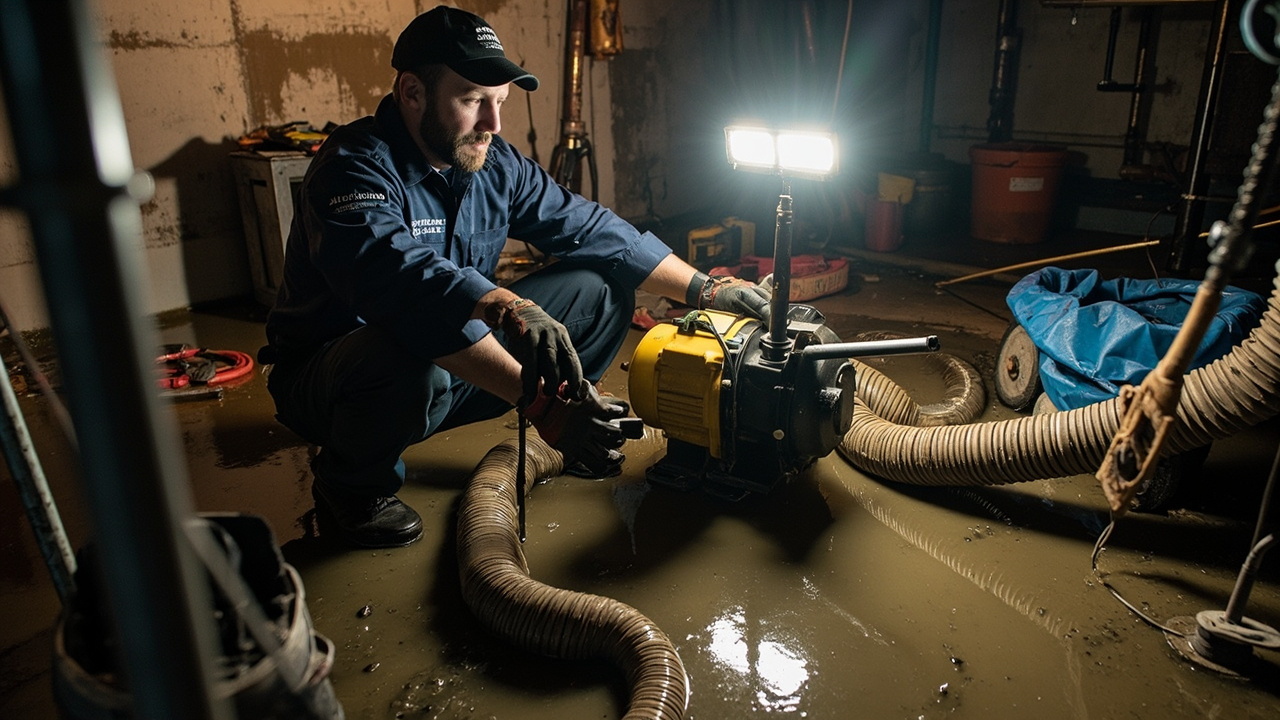
You cannot handle a flooded basement with a wet vac and towels. You need industrial-grade submersible pumps rated for high-volume extraction. Our flooded basement water removal services use pumps that move 2,000 to 3,000 gallons per hour. We deploy multiple units simultaneously to clear standing water in under two hours for most residential basements.

We do not just pump and leave. That is how you end up with hidden moisture problems and mold outbreaks. After extraction, we use commercial dehumidifiers and air movers to dry out walls, subflooring, and concrete. Moisture meters tell us when materials have returned to safe levels. We check behind drywall, inside wall cavities, and under carpet padding where water hides.

Electrical safety comes first. We shut off power to affected circuits before entering standing water. If your sump pump failed, we bring backup pumps to prevent reflooding while we work. If the flood came from a sewer backup, we treat it as a contaminated water event. That means full protective equipment, antimicrobial treatment, and proper disposal protocols.

Kansas City basements flood from multiple sources. Sump pump failures. Foundation cracks. Window well overflows. Sewer backups. Broken supply lines. Each requires different extraction and treatment protocols. We identify the source, stop the inflow, then remove the water. If your main sewer line backed up through floor drains, we coordinate with sewer line specialists to clear the blockage while we handle extraction.

Documentation matters for insurance claims. We photograph damage before and after extraction. We log equipment used, moisture readings, and square footage affected. Insurance companies demand this documentation to approve emergency basement water removal claims.

What Happens During Emergency Basement Pump-Out

Emergency Basement Flooding Pump-Out in Kansas City – We Dispatch in Under 60 Minutes
01

Immediate Dispatch and Assessment

You call. We dispatch immediately. Our team arrives in under 60 minutes for most Kansas City metro locations. We assess water depth, identify the source, and shut off electrical circuits. Safety first. Then we determine pump capacity needed and develop an extraction plan. If water is still entering, we stop the inflow before pumping. You get a clear explanation of what we will do and how long it takes.
02

High-Volume Water Extraction

We position submersible pumps in the deepest areas and run discharge hoses away from your foundation to prevent reflooding. Multiple pumps work simultaneously to clear standing water fast. We monitor water levels and move pumps as needed. Floors, walls, and belongings get initial surface drying. This phase removes bulk water to stop active damage. For contaminated water from sewer backups, we use specialized containment procedures.
03

Moisture Removal and Prevention

After extraction, hidden moisture remains in concrete, drywall, and insulation. We deploy industrial dehumidifiers and air movers to pull moisture from materials. Moisture meters guide us to problem areas. We check behind walls and under flooring. If your sump pump failed, we install temporary backup systems. You get a full report documenting moisture levels, damaged materials, and recommended repairs. This documentation supports your insurance claim.

Why Kansas City Homeowners Choose Silverline Plumbing Kansas City

When your basement floods at 2 a.m., you need a team that answers the phone and shows up. We operate 24/7/365 because basement flooding does not wait for business hours. Our technicians live and work in the Kansas City metro. We know which neighborhoods flood during heavy rains. We know the common failure points in older homes. We know how Kansas City's clay soil affects foundations.

Experience matters in emergency situations. We have pumped out hundreds of Kansas City basements. We know the difference between clean water from a burst supply line and contaminated water from a sewer backup. We know when to treat for sewage contamination and when standard extraction is sufficient. We know how to document damage for insurance adjusters who work with Kansas City homeowners.

Local expertise means faster response. We stock equipment at our Kansas City facility. When you call for basement water pump out service, we do not wait for equipment to arrive from another city. Our trucks carry multiple submersible pumps, industrial dehumidifiers, air movers, and moisture detection equipment. We arrive prepared to handle any flooding scenario.

We work directly with insurance companies. We know what documentation they require. We photograph damage comprehensively. We log moisture readings and equipment deployment. We provide detailed invoices that itemize labor and equipment costs. Many Kansas City homeowners have emergency flood pumping covered under their homeowners policy. We help you navigate the claims process.

You need a team that treats your emergency like an emergency. Not a company that says they will get to you when they can. Not a company that shows up with inadequate equipment. You need professionals who stop the damage immediately and do the job right the first time.

What to Expect from Our Emergency Response Team

Response Time and Availability

We answer emergency calls 24 hours a day, every day of the year. When you call, you speak to a real person who dispatches a technician immediately. We arrive in under 60 minutes for most Kansas City metro locations. Our technicians carry full equipment loads on every truck. No waiting for equipment delivery. No scheduling for later in the week. Your flooded basement gets immediate attention because water damage accelerates every hour. We understand that basement flooding is a crisis that demands urgent action.

On-Site Assessment and Planning

Our technician performs a complete safety and damage assessment within minutes of arrival. We identify water depth, contamination level, and inflow source. We locate electrical hazards and shut off affected circuits. We determine pump capacity and extraction time needed. You get a clear explanation of the process, timeline, and what to expect. If insurance coverage applies, we explain documentation procedures. We answer your questions before starting work. You know exactly what happens next and why each step matters for protecting your home.

Complete Water Removal

We remove all standing water using industrial submersible pumps rated for high-volume extraction. Surface water clears within one to three hours for most residential basements. Then we address hidden moisture in walls, flooring, and concrete using commercial dehumidifiers and air movers. Moisture meters confirm when materials reach safe levels. We do not leave until moisture readings meet industry standards. Your basement is dry, not just visibly clear. This prevents mold growth and structural damage. You get comprehensive drying, not just water removal.

Documentation and Follow-Up

We photograph damage before and after extraction for your insurance claim. We document moisture readings, affected square footage, and equipment deployed. You receive a detailed report that itemizes all work performed. If repairs are needed beyond water removal, we provide referrals to trusted contractors for foundation repair, mold remediation, or electrical work. If your sump pump failed, we recommend permanent solutions to prevent future flooding. We follow up to confirm your basement remains dry and answer any questions about preventing future incidents.

Frequently Asked Questions

You Have Questions,
We Have Answers

How to pump water out of a flooded basement? +

Turn off electricity to the basement at your breaker box. Remove standing water with a submersible pump or wet/dry vacuum, starting at the deepest point. For significant flooding in Kansas City, call a professional immediately. Our clay soil causes foundation shifts that can worsen water intrusion. Pump slowly to avoid pressure changes that crack walls. After pumping, remove wet materials within 24 hours to prevent mold. Document everything with photos for insurance. Identify the source—sewer backup, failed sump pump, or foundation cracks—before water returns. Speed matters in our humid Missouri climate.

How much does it cost to pump out a flooded basement? +

Cost depends on water depth, basement size, and contamination level. Simple clean water pump-outs start lower, while sewage backups or deep flooding cost more due to safety protocols and disposal requirements. Structural repairs, mold remediation, and damaged HVAC systems add expense. Kansas City's clay soil often causes foundation cracks that need repair to prevent repeat flooding. Emergency 24/7 service costs more than scheduled work. Most insurance policies cover sudden water damage but exclude gradual seepage or sump pump neglect. Get a detailed inspection before starting work to understand total costs and prevent future problems.

How long does it take to pump water out of a basement? +

Time depends on water volume and pump capacity. A typical residential submersible pump removes 2,000 to 3,000 gallons per hour. A flooded 1,000-square-foot basement with six inches of water holds about 3,700 gallons, taking two to three hours to pump out. Deeper flooding or slow drains take longer. In Kansas City, clay soil slows drainage, extending pump times. Professionals pump gradually to prevent foundation damage from sudden pressure changes. After pumping, drying takes 24 to 72 hours with industrial fans and dehumidifiers. Our humid Missouri summers slow evaporation, making professional drying equipment critical.

What kind of pump do I need to pump water out of my basement? +

You need a submersible sump pump for clean groundwater or a sewage ejector pump for contaminated water. Submersible pumps handle debris and work underwater. Choose 1/3 to 1/2 horsepower for minor flooding, 3/4 horsepower for serious water. Sewage backups require a grinder pump to handle solid waste. Kansas City homes with finished basements need a permanent sump pump with battery backup due to our spring storm power outages. Avoid garden hoses for major flooding—they cannot handle volume. Professionals use commercial-grade pumps with trash handling capabilities for emergencies.

How to remove 2 inches of water from a basement? +

Two inches of water in a 1,000-square-foot basement equals roughly 1,200 gallons. Use a wet/dry vacuum for small areas or a submersible utility pump for larger spaces. Place the pump at the lowest point and discharge water away from your foundation, ideally 10 feet minimum. Kansas City clay soil does not absorb water quickly, so pump away from the house or into storm drains where permitted. After pumping, squeegee remaining water toward drains. Run fans and a dehumidifier immediately. Check for the source—window wells, cracks, or appliance leaks—before water returns.

What to do immediately after a basement flood? +

Turn off electricity and gas to the basement immediately. Do not enter standing water with power on. Call your insurance company and document damage with photos. Remove water fast—mold starts growing within 24 hours in Kansas City's humidity. Move undamaged belongings to dry areas. Do not use contaminated water or touch sewage backups without protective gear. Call a professional for sewage or deep flooding. Identify the water source—failed sump pump, broken pipe, or foundation breach. Remove wet drywall, insulation, and carpeting quickly. Time is critical. Act within the first 48 hours to save your basement.

Will insurance pay for a flooded basement? +

Insurance coverage depends on the water source. Most homeowner policies cover sudden internal failures like burst pipes or water heater leaks. They exclude gradual seepage, groundwater flooding, or sump pump overflow unless you purchased specific endorsements. Sewage backups need separate coverage. Kansas City sits in a moderate flood zone, so standard policies exclude river or stormwater flooding—you need separate FEMA flood insurance. Review your policy now. Document damage immediately with photos and keep repair receipts. File claims within your policy timeframe. Most carriers require proof the damage was sudden and accidental.

Do plumbers fix flooded basements? +

Yes, licensed plumbers handle flooded basements caused by plumbing failures like burst pipes, water heater ruptures, or sewer backups. They also install and repair sump pumps, ejector pumps, and drainage systems. In Kansas City, plumbers understand how our clay soil and foundation settling affect basement waterproofing. They identify water sources, pump out contaminated water safely, and make repairs to prevent repeat flooding. For structural foundation cracks or exterior drainage issues, plumbers coordinate with waterproofing specialists. Choose a plumber with 24/7 emergency service and sewage handling certification for contaminated backups.

Does insurance cover basement flooding from a sump pump? +

Standard homeowner policies typically exclude sump pump failure or overflow. You need a separate sump pump backup endorsement or rider, which costs extra. This rider covers water damage when your pump fails due to mechanical breakdown or power outage. Kansas City spring storms cause frequent power failures, making backup coverage critical. The endorsement does not cover neglected maintenance or old pumps you failed to replace. It has lower limits than standard water damage coverage, often capped at $10,000. Install a battery backup sump pump to reduce risk. Review your policy annually and test your pump every season.

How likely is mold after water damage? +

Mold starts growing within 24 to 48 hours after water exposure in Kansas City's humid climate. Basements with poor ventilation, drywall, insulation, or carpeting face near-certain mold growth without immediate action. Porous materials absorb water fast. Kansas City summers with 70 percent humidity accelerate spore spread. Remove wet materials within 24 hours and run dehumidifiers to drop moisture below 50 percent. Hidden mold grows inside walls or under flooring. Professional moisture meters detect trapped water. If water sat longer than 48 hours or came from sewage, assume mold contamination and call a remediation specialist immediately.

How Kansas City's Clay Soil and River Proximity Create Basement Flooding Emergencies

Kansas City sits on expansive clay soil that does not drain well. When heavy rains saturate the ground, water has nowhere to go except into basements through foundation cracks and window wells. The proximity to the Missouri and Kansas Rivers means flood-prone areas experience rapid water accumulation during storms. Older neighborhoods built before modern waterproofing codes lack adequate drainage systems. Homes near Brush Creek, the Blue River, and low-lying areas flood regularly. Clay soil also shifts during freeze-thaw cycles, creating new foundation cracks every winter. This combination makes emergency basement water removal essential for Kansas City homeowners.

Kansas City building codes have evolved significantly since many homes were built. Older properties lack the perimeter drains and waterproofing membranes required today. Local plumbing professionals who understand Kansas City's unique soil conditions and flood patterns provide better emergency response than out-of-town companies. We know which neighborhoods flood first during storms. We know the common failure points in different foundation types. We work with local insurance adjusters who handle Kansas City flood claims regularly. Choosing a local team means faster response, better understanding of regional challenges, and expertise in preventing future flooding problems specific to Kansas City's geography.
Plumbing Services in The Kansas City Area

We invite you to visit our location or view our extensive service area on the map below. Silverline Plumbing is proud to serve the entire Kansas City metro area, bringing our professional and trustworthy plumbing services to homes and businesses across the region. We are committed to being your neighborhood plumbers, always ready to respond to your call with speed and expertise, no matter where you are located.

Address:
Silverline Plumbing Kansas City, 131 E 39th St, Kansas City, MO, 64111

Additional Services We Offer

Our news updates

Latest Articles & News from The Blogs

Which Toilet Type Saves More on Your Kansas City Water Bill? Choosing between a dual flush and single flush toilet…

Dual Flush vs Single Flush — Which Toilet Saves the Most Money on Your KCMO Water Bill?

Which Toilet Type Saves More on Your Kansas City Water Bill? Choosing between a dual flush and single flush toilet…

How to Get Instant Hot Water to Your Master Suite in Leawood Without Wasting Gallons

How to Get Instant Hot Water to Your Master Suite in Leawood Without Wasting Gallons Waiting three minutes for hot…

Reverse Osmosis vs Whole House Filtration — Finding the Right Pure Water Solution in Liberty

Reverse Osmosis vs Whole House Filtration — Finding the Right Pure Water Solution in Liberty Homeowners in Liberty face a…

Contact Us

Every minute your basement stays flooded causes more damage. Call (816) 473-9233 right now for emergency basement flooding pump-out. We dispatch immediately and arrive in under 60 minutes. Available 24/7/365 throughout the Kansas City metro.