
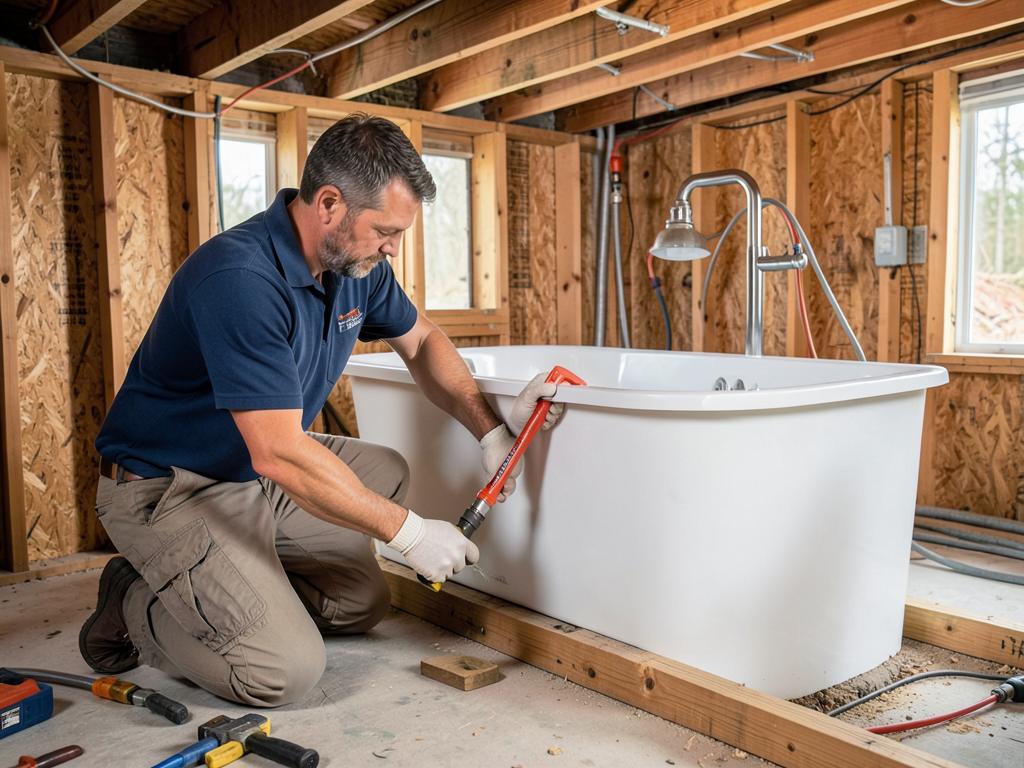
Can Your Westwood Floor Support the Weight of a New Freestanding Soaking Tub?
Installing a freestanding soaking tub transforms your Westwood bathroom into a spa-like retreat. But before you fall in love with that beautiful cast iron tub, you need to know if your floor can handle the weight. A full tub with water and a person can weigh over 1,500 pounds—that’s like parking a grand piano in your bathroom.. Read more about Why it Takes Forever for Hot Water to Reach Your Mission Hills Master Bathroom.
Older Westwood homes built in the 1950s and 1960s often have 2×6 floor joists spaced 16 inches apart. These may not meet modern load-bearing requirements for heavy fixtures. The soil in Westwood contains expansive clay that shifts seasonally, which can stress floor structures over time.
We’ll walk through the exact calculations, local building code requirements, and warning signs your floor needs reinforcement before you make that tub purchase.
Understanding Freestanding Tub Weight: More Than Just the Tub Itself
A freestanding tub’s total weight includes three components: the empty tub, the water capacity, and the person using it. An empty acrylic tub weighs 100-150 pounds while a cast iron model can weigh 300-500 pounds. Water weighs 8.34 pounds per gallon, and a typical 60-gallon tub adds 500 pounds when full.
Add a 200-pound person and you’re looking at 800-1,200 pounds of static load. That weight concentrates on four small feet rather than spreading across a large base like a built-in tub.
Westwood’s older homes often have subfloors of 1/2-inch plywood over 2×6 joists. Modern codes typically require 3/4-inch subfloor and 2×8 joists for areas supporting over 40 pounds per square foot. Your tub’s four feet might contact just 1-2 square feet of floor area, creating point loads that exceed what older structures were designed to handle.
Warning signs your floor needs inspection: noticeable bounce when walking nearby, visible sagging between joists, or doors that stick because the floor has settled. These indicate your floor may not support the concentrated weight of a filled freestanding tub.
Calculating Your Floor’s Load-Bearing Capacity
To determine if your Westwood floor can handle a freestanding tub, you need to calculate the load per square foot. Start with your tub’s dimensions and weight capacity. A standard 60-inch tub might measure 30×60 inches, giving you 12.5 square feet of floor contact area.
If your tub weighs 1,200 pounds when full and contacts 12.5 square feet, that’s 96 pounds per square foot—nearly double what many older Westwood homes were designed to support. Modern building codes require floors in bathrooms to support 40-50 pounds per square foot for residential use.
Floor joist span tables matter: A 2×6 joist spanning 12 feet can support about 30 pounds per square foot. A 2×8 joist spanning the same distance can support 40-50 pounds per square foot. The difference between these two joist sizes determines whether your floor needs reinforcement.
Check your basement or crawl space to see what you’re working with. Look for the stamp on the side of the joist that shows the size and species of wood. Oak and Douglas fir can support more weight than southern yellow pine of the same dimensions. Keep Your Olathe Basement Dry with Reliable Sump Pump Repair and Maintenance.
Moisture damage from Westwood’s humid summers can weaken floor structures over time. Even if your joists look adequate on paper, years of water exposure from bathroom leaks or high humidity can reduce their load-bearing capacity by 20-30%.
Kansas City Building Codes for Bathroom Fixture Installation
The Kansas City, Missouri, Plumbing Code (Chapter 11 of the KCMO Building Code) requires that all plumbing fixtures be installed according to manufacturer specifications and local structural requirements. For freestanding tubs, this means ensuring the floor structure meets minimum load requirements before installation. KCMO Building Code Chapter 11.
According to the International Plumbing Code adopted by most Kansas City suburbs, bathroom floors must support a minimum live load of 40 pounds per square foot. This covers typical use but may not account for the concentrated loads of freestanding tubs. International Plumbing Code.
Permit requirements: Installing a new freestanding tub typically requires a plumbing permit from the KCMO Development Services Department. This ensures your installation meets code requirements for drainage, supply lines, and structural support. The permit process includes inspection of the rough plumbing before the tub is set in place.
Johnson County and other suburban jurisdictions may have different requirements. Overland Park requires permits for any plumbing modification that changes the fixture’s location or involves new supply lines. Lee’s Summit requires structural engineering approval for loads exceeding 50 pounds per square foot in bathroom areas. Fix Your Overland Park Sewer Line Without Digging Up Your Entire Yard.
Island tub drains require special consideration: Unlike standard tubs that connect to nearby plumbing walls, freestanding tubs need a drain that runs under the floor to a remote connection. This often means cutting floor joists or drilling through them, which can compromise structural integrity if not done correctly.
The Uniform Plumbing Code (UPC) Section 701.1 requires that all drainage systems be properly supported and that no structural members be weakened without compensation. This means any floor modifications for tub drains must be engineered to maintain the floor’s load-bearing capacity. DIY vs. Professional Drain Cleaning.
Floor Reinforcement Options for Westwood Homes
If calculations show your floor can’t support a freestanding tub, several reinforcement options exist. The most common approach involves adding support posts in the basement or crawl space directly beneath the tub location. These posts transfer the load to the foundation or basement floor.
Sistering joists: This involves attaching new joists alongside existing ones to increase strength. For a 2×6 joist, adding a 2×8 sister doubles the load capacity. This works well when you have access from below and the existing joists are sound.
Adding a beam perpendicular to joists can also distribute the load across multiple supports. A properly sized LVL (laminated veneer lumber) beam can carry the tub’s weight while only requiring support posts every 6-8 feet.
Plywood subfloor reinforcement: Adding a second layer of 3/4-inch plywood over the existing subfloor helps distribute point loads from tub feet. This works best when combined with joist reinforcement since it doesn’t increase the floor’s fundamental strength.
Steel support plates under tub feet provide another layer of protection. These plates spread the load over a larger area and can be installed during the tub setup if you’re concerned about point loading on older floors.
The cost of reinforcement varies significantly. Sistering joists might cost $500-1,000 in materials and labor. Adding support posts and beams could run $1,500-3,000. A structural engineer’s assessment costs $300-600 but provides peace of mind and ensures code compliance.
Choosing the Right Freestanding Tub for Your Westwood Bathroom
Material selection impacts both weight and installation requirements. Acrylic tubs weigh the least and offer good durability, making them ideal for older homes with potential floor concerns. A typical 60-gallon acrylic tub weighs 100-150 pounds empty.
Fiberglass tubs are even lighter but less durable. They work well for second-floor installations where weight is a primary concern. These tubs typically weigh 50-100 pounds empty.
Cast iron tubs provide excellent durability and heat retention but weigh significantly more. A 60-inch cast iron tub can weigh 300-500 pounds empty, plus the water weight. These tubs often require floor reinforcement even in newer homes.
Stone and solid surface tubs offer luxury aesthetics but come with substantial weight penalties. A granite or marble tub can weigh 600-800 pounds empty. These almost always require engineering assessment and floor reinforcement.
Size matters for weight distribution: A larger tub spreads weight over more floor area, reducing pounds per square foot. A 72-inch tub might contact 15-18 square feet versus 12-13 square feet for a 60-inch model, making a significant difference in load calculations.
Consider the tub’s shape as well. Oval tubs often have more floor contact area than rectangular ones with feet. Some modern designs incorporate a wider base that distributes weight more effectively across the floor structure.
Plumbing Rough-In Requirements for Freestanding Tubs
Freestanding tubs require different plumbing approaches than built-in models. The drain must be roughed in before floor work begins, and it needs to be precisely positioned under where the tub will sit. Even a few inches of error can prevent proper installation. Plumbing Gladstone.
Island tub drains: These specialized assemblies work with freestanding tubs and include a p-trap that’s accessible from below rather than through a wall. The trap must be within 24 inches of the fixture to meet code requirements and prevent siphonage issues.
Water supply lines need careful planning. Floor-mounted tub fillers require a 1/2-inch hot and cold supply line running through the floor to the filler’s base. These lines must be properly secured to prevent movement and potential leaks.
The drain pipe size matters for freestanding tubs. Most require a 1.5-inch drain, though some larger models need 2-inch drains to handle the water volume from fill and overflow simultaneously.
Access panel requirements: The International Residential Code requires access to p-traps and cleanouts. For freestanding tubs, this usually means creating an access panel in the ceiling below or a nearby wall. This access must be at least 12×12 inches to accommodate maintenance.
Water hammer arrestors may be necessary for floor-mounted fillers, especially in older Westwood homes with 1/2-inch supply lines. These devices prevent pipe banging when the filler’s valve closes quickly.
Waterproofing and Subfloor Preparation
Even if your floor structure is sound, proper waterproofing protects against future damage. Water from a freestanding tub can seep under the edges and damage subfloors, especially in older Westwood homes with hardwood flooring.
RedGard or similar waterproofing membranes: Apply these liquid membranes to the entire floor area where the tub will sit. This creates a waterproof barrier that prevents moisture from reaching the subfloor. Extend the membrane 6 inches beyond the tub’s footprint for complete protection.
Cement board underlayment provides a stable, moisture-resistant surface for tile or other flooring around the tub. Use 1/2-inch cement board rather than standard drywall in wet areas. Secure it with corrosion-resistant screws every 8 inches.
Floor leveling is critical: Freestanding tubs require perfectly level floors to drain properly and maintain their appearance. Use self-leveling compound to correct minor floor irregularities before tub installation. This prevents stress on the tub’s feet and ensures proper drainage.
Consider the height difference between your tub and surrounding floor. Most freestanding tubs sit 24-28 inches high, which may require steps or a platform for comfortable entry, especially in older Westwood homes with standard 8-foot ceilings.
Expansion gaps around the tub allow for floor movement without damaging the tub or surrounding materials. Leave 1/4-inch gaps and fill them with flexible caulk rather than grout, which can crack with seasonal movement.
Cost Considerations for Freestanding Tub Installation in Westwood
The total cost of installing a freestanding tub in your Westwood home varies widely based on your specific situation. A basic acrylic tub installation might cost $2,000-3,500 including the tub, plumbing, and basic installation.
Cast iron or stone tubs with professional installation typically run $4,000-7,000. These require more careful handling and often need additional structural support.
Floor reinforcement adds significant cost: If your Westwood home needs joist sistering or support posts, expect to pay $1,500-3,000 additional for structural work. This brings the total project cost to $4,000-8,000 for a complete installation.
Plumbing modifications for island drains cost $500-1,500 depending on the complexity of running new drain lines and the need to cut through floor joists. This work must be done by a licensed plumber to meet local code requirements.
Waterproofing and subfloor preparation add $300-800 to the project. This includes materials and labor for proper moisture protection around the tub area.
Don’t forget permit costs. The KCMO Development Services Department charges $50-150 for plumbing permits, depending on the project scope. Some suburban jurisdictions have similar or higher permit fees.
Factor in potential repairs to flooring or ceiling below if access is needed for plumbing work. This could add $200-500 if drywall repair is necessary after accessing drain lines.
Professional Assessment: When to Call a Kansas City Plumber
Certain situations require professional evaluation before proceeding with a freestanding tub installation. If your Westwood home was built before 1980, the floor structure likely doesn’t meet modern load requirements for heavy fixtures.
Visible floor deflection when walking near the proposed tub location indicates structural weakness. A professional can measure this deflection and determine if reinforcement is needed.
Basements or crawl spaces with limited access make DIY assessment difficult. A plumber with experience in older Kansas City homes knows what to look for and can identify potential issues you might miss.
If your home has had water damage or pest issues, the floor structure may be compromised even if it looks adequate. Professional inspection can reveal hidden damage that affects load-bearing capacity.
Complex plumbing modifications, especially those involving cutting floor joists or running new drain lines, require professional expertise to maintain structural integrity and code compliance.
Peace of mind has value: A professional assessment costs $150-300 but can prevent costly mistakes. If the plumber identifies needed reinforcement early, you can plan for it rather than facing unexpected expenses mid-project.
Many Kansas City plumbers offer free estimates for tub installations. They can evaluate your specific situation, provide accurate cost estimates, and identify any code compliance issues before you purchase a tub.
Maintaining Your Freestanding Tub Investment
Once installed, proper maintenance ensures your freestanding tub remains beautiful and functional for years. Different materials require different care approaches.
Acrylic tubs clean easily with non-abrasive cleaners and a soft cloth. Avoid harsh chemicals that can dull the surface. For stubborn stains, a paste of baking soda and water works well without scratching.
Cast iron tubs with porcelain enamel need gentle care to prevent chipping. Avoid dropping heavy items and use non-abrasive cleaners. The enamel can chip if struck hard, exposing the iron beneath to rust.
Stone tubs require sealing every 6-12 months depending on use. Natural stone is porous and can stain if not properly sealed. Use pH-neutral cleaners specifically designed for stone surfaces.
Check the floor around your tub periodically for signs of movement or water damage. Even with proper waterproofing, plumbing connections can develop leaks over time. Address any moisture issues immediately to prevent subfloor damage.
Floor-mounted tub fillers need occasional tightening as connections can work loose over time. Check the stability of the filler annually and tighten mounting hardware as needed.
The access panel to your tub’s p-trap should be used for annual inspection. Check for leaks, clean the trap if necessary, and ensure all connections remain tight.
Consider adding a water softener if you have hard water. Mineral buildup can affect both the tub’s appearance and the efficiency of your plumbing fixtures over time.
Frequently Asked Questions
How much does a typical freestanding tub weigh when full?
A standard 60-gallon acrylic tub weighs about 100-150 pounds empty. Add 500 pounds for water and 200 pounds for a person, and you’re looking at 800-900 pounds total. Cast iron models can weigh 1,500-2,000 pounds when full.
Do I need a permit to install a freestanding tub in Kansas City?
Yes, most freestanding tub installations require a plumbing permit from your local building department. This ensures proper drainage, supply lines, and structural support meet code requirements. Permit fees typically range from $50-150 depending on your jurisdiction.
Can I install a freestanding tub on the second floor of my Westwood home?
Second-floor installations are possible but require careful evaluation of the floor structure. Older Westwood homes often need joist reinforcement or support posts to handle the concentrated weight. A structural engineer or experienced plumber can assess your specific situation.
What’s the difference between an island tub drain and a standard tub drain?
Island tub drains work with freestanding tubs and include a p-trap that’s accessible from below rather than through a wall. They require precise placement under the tub and often need an access panel for maintenance. Standard tub drains connect through nearby walls and don’t require special access.
How do I know if my floor needs reinforcement for a freestanding tub?
Check for floor bounce when walking nearby, visible sagging between joists, or doors that stick due to floor settling. A professional can calculate the load per square foot and compare it to your floor’s capacity. Homes built before 1980 often need reinforcement for heavy tubs.
What’s the best material for a freestanding tub in an older home?
Acrylic tubs offer the best combination of light weight and durability for older homes. They typically weigh 100-150 pounds empty versus 300-500 pounds for cast iron. This weight difference can mean the difference between needing floor reinforcement or not.
How much does it cost to reinforce a floor for a freestanding tub?
Floor reinforcement costs vary based on the scope of work. Sistering joists might cost $500-1,000. Adding support posts and beams could run $1,500-3,000. A structural engineer’s assessment adds $300-600 but ensures proper design and code compliance.
Can I install a freestanding tub myself to save money?
While DIY installation is possible, freestanding tubs require precise plumbing connections and often structural modifications. Mistakes can lead to water damage, code violations, or even collapse. Professional installation ensures proper function, warranty protection, and compliance with local building codes.
You may also find this helpful. What Homeowners in Mission Hills Need to Know Before Installing a Luxury Steam Shower.
You may also find this helpful. Designing the Perfect Mudroom Dog Wash Station for Your Olathe Home.
You may also find this helpful. Why Your Mission Woods Shower Has Low Pressure While the Rest of the House is Fine.
{
“@context”: “https://schema.org”,
“@type”: “BlogPosting”,
“headline”: “Can Your Westwood Floor Support the Weight of a New Freestanding Soaking Tub?”,
“description”: “Kansas City homeowners: Learn if your Westwood floor can handle a new freestanding tub’s weight. Get local building code requirements, weight calculations, and expert installation tips.”,
“wordCount”: 2862,
“datePublished”: “2026-05-18T15:01:00.000Z”,
“dateModified”: “2026-05-18T15:01:00.000Z”,
“inLanguage”: “en-US”,
“mainEntityOfPage”: {
“@type”: “WebPage”,
“@id”: “https://silverlineplumbingkansascity.com”
},
“publisher”: {
“@type”: “LocalBusiness”,
“name”: “Silverline Plumbing Kansas City”,
“url”: “https://silverlineplumbingkansascity.com”
},
“author”: {
“@type”: “Organization”,
“name”: “Silverline Plumbing Kansas City”,
“url”: “https://silverlineplumbingkansascity.com”
},
“image”: {
“@type”: “ImageObject”,
“url”: “https://silverlineplumbingkansascity.com/wp-content/uploads/2026/03/can-your-westwood-floor-support-the-weight-of-a-ne-1.png”
}
}
{
“@context”: “https://schema.org”,
“@type”: “Plumber”,
“name”: “Silverline Plumbing Kansas City”,
“url”: “https://silverlineplumbingkansascity.com”,
“address”: {
“@type”: “PostalAddress”,
“addressLocality”: “Kansas City”
},
“areaServed”: {
“@type”: “City”,
“name”: “Kansas City”
}
}
{
“@context”: “https://schema.org”,
“@type”: “FAQPage”,
“mainEntity”: [
{
“@type”: “Question”,
“name”: “How much does a typical freestanding tub weigh when full?”,
“acceptedAnswer”: {
“@type”: “Answer”,
“text”: “A standard 60-gallon acrylic tub weighs about 100-150 pounds empty. Add 500 pounds for water and 200 pounds for a person, and you’re looking at 800-900 pounds total. Cast iron models can weigh 1,500-2,000 pounds when full.”
}
},
{
“@type”: “Question”,
“name”: “Do I need a permit to install a freestanding tub in Kansas City?”,
“acceptedAnswer”: {
“@type”: “Answer”,
“text”: “Yes, most freestanding tub installations require a plumbing permit from your local building department. This ensures proper drainage, supply lines, and structural support meet code requirements. Permit fees typically range from $50-150 depending on your jurisdiction.”
}
},
{
“@type”: “Question”,
“name”: “Can I install a freestanding tub on the second floor of my Westwood home?”,
“acceptedAnswer”: {
“@type”: “Answer”,
“text”: “Second-floor installations are possible but require careful evaluation of the floor structure. Older Westwood homes often need joist reinforcement or support posts to handle the concentrated weight. A structural engineer or experienced plumber can assess your specific situation.”
}
},
{
“@type”: “Question”,
“name”: “What’s the difference between an island tub drain and a standard tub drain?”,
“acceptedAnswer”: {
“@type”: “Answer”,
“text”: “Island tub drains work with freestanding tubs and include a p-trap that’s accessible from below rather than through a wall. They require precise placement under the tub and often need an access panel for maintenance. Standard tub drains connect through nearby walls and don’t require special access.”
}
},
{
“@type”: “Question”,
“name”: “How do I know if my floor needs reinforcement for a freestanding tub?”,
“acceptedAnswer”: {
“@type”: “Answer”,
“text”: “Check for floor bounce when walking nearby, visible sagging between joists, or doors that stick due to floor settling. A professional can calculate the load per square foot and compare it to your floor’s capacity. Homes built before 1980 often need reinforcement for heavy tubs.”
}
},
{
“@type”: “Question”,
“name”: “What’s the best material for a freestanding tub in an older home?”,
“acceptedAnswer”: {
“@type”: “Answer”,
“text”: “Acrylic tubs offer the best combination of light weight and durability for older homes. They typically weigh 100-150 pounds empty versus 300-500 pounds for cast iron. This weight difference can mean the difference between needing floor reinforcement or not.”
}
},
{
“@type”: “Question”,
“name”: “How much does it cost to reinforce a floor for a freestanding tub?”,
“acceptedAnswer”: {
“@type”: “Answer”,
“text”: “Floor reinforcement costs vary based on the scope of work. Sistering joists might cost $500-1,000. Adding support posts and beams could run $1,500-3,000. A structural engineer’s assessment adds $300-600 but ensures proper design and code compliance.”
}
},
{
“@type”: “Question”,
“name”: “Can I install a freestanding tub myself to save money?”,
“acceptedAnswer”: {
“@type”: “Answer”,
“text”: “While DIY installation is possible, freestanding tubs require precise plumbing connections and often structural modifications. Mistakes can lead to water damage, code violations, or even collapse. Professional installation ensures proper function, warranty protection, and compliance with local building codes.”
}
}
]
}
{
“@context”: “https://schema.org”,
“@type”: “BreadcrumbList”,
“itemListElement”: [
{
“@type”: “ListItem”,
“position”: 1,
“name”: “Home”,
“item”: “https://silverlineplumbingkansascity.com”
},
{
“@type”: “ListItem”,
“position”: 2,
“name”: “Blog”,
“item”: “https://silverlineplumbingkansascity.com/blog”
},
{
“@type”: “ListItem”,
“position”: 3,
“name”: “Can Your Westwood Floor Support the Weight of a New Freestanding Soaking Tub?”
}
]
}
{
“@context”: “https://schema.org”,
“@type”: “Service”,
“serviceType”: “Plumbing”,
“provider”: {
“@type”: “LocalBusiness”,
“name”: “Silverline Plumbing Kansas City”,
“url”: “https://silverlineplumbingkansascity.com”
},
“areaServed”: {
“@type”: “City”,
“name”: “Kansas City”
},
“description”: “Kansas City homeowners: Learn if your Westwood floor can handle a new freestanding tub’s weight. Get local building code requirements, weight calculations, and expert installation tips.”
}