
Why your Raymore laundry room smells like mildew every time you run a load
That musty mildew smell hits you every time you walk into your laundry room after starting a wash cycle. The odor is not just unpleasant—it signals a real plumbing or appliance problem that needs attention. In Raymore homes, this issue often stems from a combination of local water quality, home age, and drainage design. DIY vs. Professional Drain Cleaning.
The smell usually comes from one of five sources: mold growing inside your front-load washer, a dry P-trap in the floor drain, a clogged standpipe, poor venting, or biofilm buildup in the drain lines. Identifying which cause applies to your situation is the first step toward fixing it.
Raymore’s humid summers and clay-heavy soil create the perfect conditions for moisture problems. Homes built before 2000 often have cast iron drain lines that corrode internally, creating pockets where bacteria and mildew thrive. Add in Raymore’s hard water, and you get mineral deposits that trap organic material and worsen the odor.. Read more about Designing the Perfect Mudroom Dog Wash Station for Your Olathe Home.
Before calling a plumber, try these simple checks: leave your washer door open between loads, clean the rubber gasket with vinegar, and pour a quart of water down the floor drain to refill the P-trap. If the smell persists, you likely have a deeper plumbing issue that requires professional diagnosis. Plumbing Gladstone.
Call (816) 473-9233 today to schedule your inspection. Our licensed plumbers will identify the exact source of the odor and recommend the right fix—whether it’s a simple cleaning or a full drain line replacement.
Immediate Troubleshooting: Is it the Machine or the Plumbing?
Start by isolating the smell. Open your washer door and take a sniff near the rubber gasket. If the odor is strongest there, the problem is inside the machine. If the smell seems to rise from the floor or standpipe area, the issue is in your home’s plumbing system.
Next, run your washer empty on a hot water cycle with a cup of white vinegar. If the mildew smell decreases, you’re dealing with surface mold in the washer. If it stays the same or worsens, the odor is coming from the drain lines or P-traps.. Read more about Why Your Cold Water Pipes are Sweating and How to Prevent Basement Mold in Bonner Springs.
Check your floor drain by shining a flashlight inside. If you see standing water, the P-trap is working. If it’s dry, pour a quart of water down the drain and wait 24 hours. If the smell returns, you may have a cracked trap or a sewer gas leak. Fix Your Overland Park Sewer Line Without Digging Up Your Entire Yard.
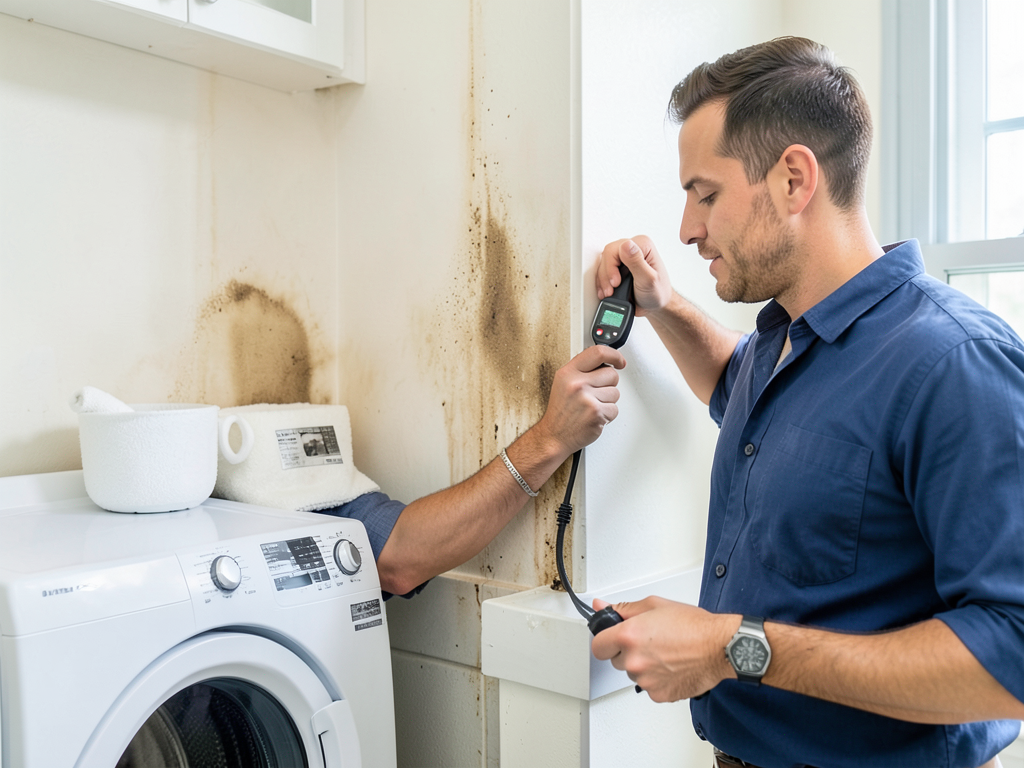
Photo of a technician using a moisture meter to check for hidden dampness behind a laundry room wall.
Common Culprit 1: The Front-Load Washer Gasket
Front-load washers are prone to mold growth because their rubber door seals trap moisture. Raymore’s high humidity makes this problem worse. The rubber bellows create dark, damp pockets where detergent residue and lint collect, feeding mold and mildew.
To clean the gasket, mix one cup of white vinegar with a gallon of warm water. Use a soft brush to scrub the folds of the rubber seal, paying special attention to the bottom where water pools. Wipe dry with a clean cloth and leave the door open for at least two hours.
Prevent future growth by using HE (high-efficiency) detergent in the correct amount, wiping the gasket after each load, and running a monthly cleaning cycle with Affresh or a similar washer cleaner. Raymore residents should also consider a dehumidifier in the laundry room during summer months.
If the gasket is cracked or torn, replace it immediately. A damaged seal not only causes odors but can also lead to water leaks that damage your floor and subfloor.
Common Culprit 2: The Dried-Out P-Trap
Every drain in your home has a P-trap—a U-shaped pipe that holds water to block sewer gases. In Raymore basements, floor drains often go unused for months, allowing the water in the trap to evaporate. Once the seal breaks, sewer gas and mildew odors rise into your laundry room. Keep Your Olathe Basement Dry with Reliable Sump Pump Repair and Maintenance.
Pouring water down the drain should fix this temporarily. If the smell returns within a day or two, the trap may be cracked or the vent line may be blocked. In older Raymore homes, cast iron traps corrode and develop hairline fractures that leak both water and odors.
According to the International Plumbing Code (IPC) Section 908.2, every trap must maintain a water seal at least two inches deep. A dry trap violates this code and can allow hazardous sewer gases like hydrogen sulfide into your home. International Plumbing Code Section 908.2.
Call (816) 473-9233 to have a licensed plumber inspect your P-traps. We’ll pressure-test the system and replace any damaged traps with modern PVC that resists corrosion and maintains a proper seal.
Common Culprit 3: Clogged Standpipes and Venting Issues
Your washing machine drains into a standpipe that connects to the home’s main drain stack. Over time, lint, soap scum, and mineral buildup narrow this pipe, creating a partial clog. When water rushes past the clog during a wash cycle, it churns up stagnant water and releases foul odors.
A blocked vent stack makes the problem worse. Plumbing vents equalize air pressure in your drain system. If a bird nest, leaves, or ice blocks the vent on your roof, water drains slowly and traps air pockets that push sewer gas back into your laundry room.
Signs of a venting problem include gurgling sounds in nearby drains, slow drainage from the washer, and bubbles rising in the toilet when the machine drains. These symptoms indicate negative pressure in your plumbing system.
Professional hydro-jetting can clear years of buildup from standpipes and restore proper flow. We also inspect and clear vent stacks to ensure your system breathes correctly. This work requires climbing onto your roof and using specialized equipment—never attempt it yourself.
Kansas City Specific: Humidity and Basement Seepage
Raymore sits in the Kansas City metro area, where summer humidity regularly exceeds 70%. This moisture penetrates basements and laundry rooms, condensing on cold drain pipes and creating the damp environment mildew loves. Clay soil in Raymore expands when wet, putting pressure on basement walls and causing tiny cracks where moisture seeps in.
Older Raymore homes often lack proper vapor barriers in crawl spaces and basements. Without this protection, ground moisture evaporates into the air, raising humidity levels and feeding mold growth. Combine this with a minor plumbing leak, and you have the perfect storm for persistent mildew smells.
Install a hygrometer in your laundry room to monitor humidity. Levels above 60% signal a problem. A small dehumidifier can reduce moisture and prevent mildew, but it won’t fix underlying drainage or foundation issues.
Check your basement walls for efflorescence—white, chalky deposits that indicate water is moving through the concrete. This mineral buildup often accompanies mildew odors and suggests you need both plumbing repairs and moisture control solutions. EPA mold prevention guidelines.
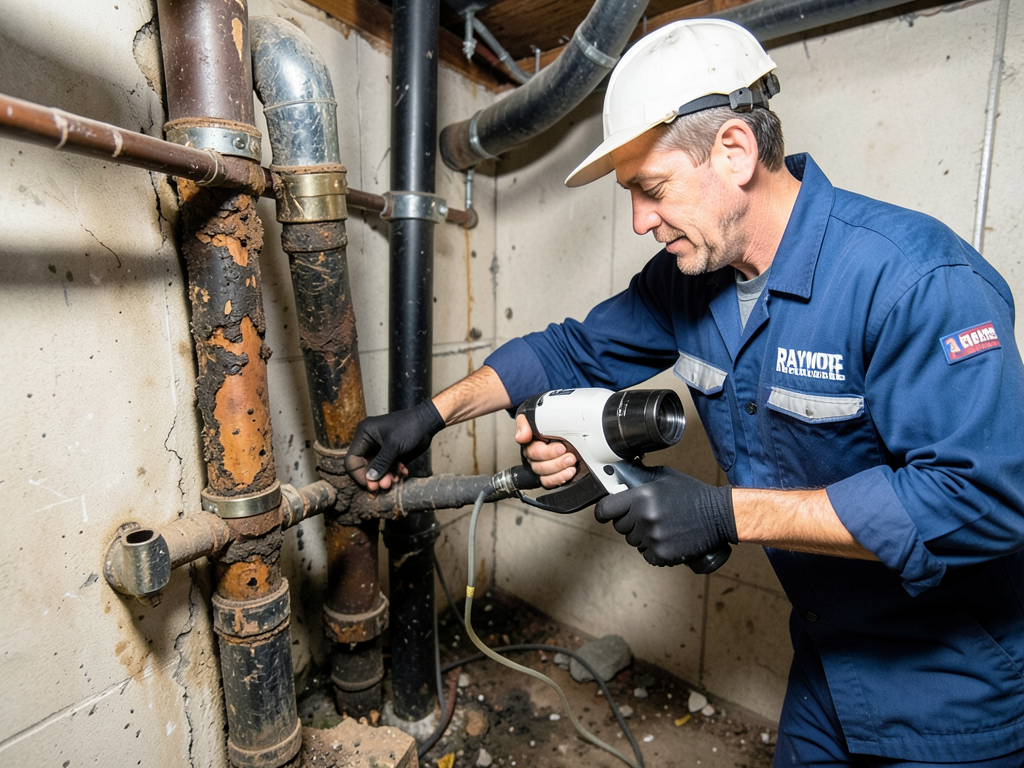
Technician using a sewer camera to inspect a cast iron drain line in a Raymore basement, showing corrosion and buildup.
When to Call a Professional
DIY fixes work for surface mold and dry traps, but some problems require professional tools and expertise. Call a licensed plumber if you notice any of these warning signs: the smell persists after cleaning, multiple drains gurgle, you see water backing up into the washer, or you smell rotten eggs (hydrogen sulfide).
Professional diagnosis includes video camera inspection of your drain lines, pressure testing of traps, and checking vent stack airflow. We use smoke testing to find hidden cracks in pipes that let sewer gas escape. These tests reveal problems you cannot see or smell directly.
In Raymore, many homes built before 1990 have Orangeburg or early PVC drain lines that deteriorate from the inside out. These pipes develop bellies—low spots where water pools and bacteria grow. Only a camera inspection can confirm this condition.
According to the EPA’s moisture control guidelines, indoor humidity should stay between 30-50% to prevent mold growth. Persistent mildew odors often indicate humidity above this range combined with a plumbing defect. We address both issues simultaneously for lasting results.
Call (816) 473-9233 before the next storm hits. Heavy rain can worsen existing drainage problems, leading to sewage backups and costly water damage. Our emergency response team is ready 24/7 for Raymore residents.
Preventing Future Mildew Smells
Prevention starts with monthly maintenance. Once a month, run your washer on the hottest cycle with a washing machine cleaner. Pour a quart of water down unused floor drains. Check your vent stack for visible obstructions like bird nests or leaves.
Install a whole-house dehumidifier if your basement humidity stays above 60%. Clean your dryer vent annually to prevent lint buildup that can contribute to moisture problems. Replace old rubber washing machine hoses with stainless steel braided ones to prevent leaks.
Consider installing a backwater valve if your home sits in a low area of Raymore. These devices prevent sewage from backing up into your home during heavy rains—a common cause of sudden mildew odors and water damage.
Schedule annual plumbing inspections to catch small problems before they become major repairs. A licensed plumber can identify early signs of pipe corrosion, vent blockages, and moisture intrusion that homeowners often miss.
Cost Factors for Professional Repairs
Simple services like trap replacement or standpipe cleaning typically cost $150-$300. More complex work like vent stack clearing runs $200-$500. If your home needs complete drain line replacement due to corrosion, expect to invest $2,000-$5,000 depending on the length and accessibility of the pipes.
Emergency services after hours or on weekends carry a premium of 50-100%. However, addressing the problem immediately often prevents thousands in water damage repairs. Many Raymore homeowners find that regular maintenance costs less than emergency repairs.
We provide written estimates before starting any work and explain all your options. Our goal is to fix the problem correctly the first time, not to sell you services you don’t need.
Before and after comparison showing a clean, odor-free laundry room after professional drain cleaning and trap replacement.
Frequently Asked Questions
Why does my laundry room smell worse when it rains?
Heavy rain increases pressure in municipal sewer lines, forcing gases back through your home’s plumbing if vents or traps are compromised. This is especially common in Raymore during spring storms.
Can mildew in my laundry room make me sick?
Yes. Mold spores and sewer gases can cause respiratory issues, headaches, and allergic reactions. Children, elderly, and people with asthma are most vulnerable.
How often should I clean my washing machine to prevent odors?
Run a cleaning cycle with washer cleaner once a month. Leave the door open between loads and wipe the gasket weekly to prevent mold growth.
Is a mildew smell covered by homeowners insurance?
Standard policies cover sudden, accidental water damage but not gradual problems like mold from maintenance issues. Check your policy details or call your agent for specifics.
What’s the difference between mildew and mold?
Mildew is a surface fungus that appears white or gray and is easier to clean. Mold grows deeper into materials, appears black or green, and requires professional remediation.
Can I use bleach to clean mildew smells?
Bleach kills surface mold but does not address the underlying moisture problem. It can also damage rubber seals and plumbing components. Use vinegar or commercial washer cleaners instead.
How long does professional drain cleaning take?
Most drain cleaning services take 1-3 hours. Camera inspections add another 30-60 minutes. Complex repairs may require multiple visits depending on the scope of work.
Should I replace my old washing machine if it smells?
Not necessarily. Most odor problems come from plumbing or maintenance issues, not the machine itself. Try cleaning and maintenance first before considering replacement.
What causes a rotten egg smell in my laundry room?
This odor indicates hydrogen sulfide gas, a byproduct of sewer gas. It means you have a serious plumbing issue that requires immediate professional attention.
How can I tell if my P-trap is broken?
Signs include persistent sewer gas smells, slow drainage, and visible cracks or corrosion. A plumber can pressure-test the trap to confirm its condition.
Conclusion
That mildew smell in your Raymore laundry room is not just a nuisance—it’s a warning sign of plumbing problems that can worsen over time. Whether it’s a simple fix like cleaning your washer gasket or a complex issue like corroded drain lines, addressing the root cause protects your home and your family’s health.
Raymore’s unique climate and soil conditions make local expertise essential. Our licensed plumbers understand the specific challenges of older homes in your area and provide lasting solutions backed by warranties. Solving the Unique Plumbing Problems Common in Older Brookside and Waldo Homes.
Stop guessing and start breathing easier. Call (816) 473-9233 today to schedule your professional inspection. We’ll diagnose the problem, explain your options, and get your laundry room smelling fresh again—guaranteed.
You may also find this helpful. Comparing Gas and Electric Tankless Water Heaters for New Homes in Raymore.
{
“@context”: “https://schema.org”,
“@type”: “BlogPosting”,
“headline”: “Why your Raymore laundry room smells like mildew every time you run a load”,
“description”: “Stop the mildew smell in your Raymore laundry room. Learn the 5 common causes and when to call a licensed plumber for professional drain cleaning.”,
“wordCount”: 2159,
“datePublished”: “2026-05-16T15:34:00.000Z”,
“dateModified”: “2026-05-16T15:34:00.000Z”,
“inLanguage”: “en-US”,
“mainEntityOfPage”: {
“@type”: “WebPage”,
“@id”: “https://silverlineplumbingkansascity.com”
},
“publisher”: {
“@type”: “LocalBusiness”,
“name”: “Silverline Plumbing Kansas City”,
“url”: “https://silverlineplumbingkansascity.com”
},
“author”: {
“@type”: “Organization”,
“name”: “Silverline Plumbing Kansas City”,
“url”: “https://silverlineplumbingkansascity.com”
},
“image”: {
“@type”: “ImageObject”,
“url”: “https://silverlineplumbingkansascity.com/wp-content/uploads/2026/03/why-your-raymore-laundry-room-smells-like-mildew-e-1.png”
}
}
{
“@context”: “https://schema.org”,
“@type”: “Plumber”,
“name”: “Silverline Plumbing Kansas City”,
“url”: “https://silverlineplumbingkansascity.com”,
“address”: {
“@type”: “PostalAddress”,
“addressLocality”: “Kansas City”
},
“areaServed”: {
“@type”: “City”,
“name”: “Kansas City”
}
}
{
“@context”: “https://schema.org”,
“@type”: “FAQPage”,
“mainEntity”: [
{
“@type”: “Question”,
“name”: “Immediate Troubleshooting: Is it the Machine or the Plumbing?”,
“acceptedAnswer”: {
“@type”: “Answer”,
“text”: “Start by isolating the smell. Open your washer door and take a sniff near the rubber gasket. If the odor is strongest there, the problem is inside the machine. If the smell seems to rise from the floor or standpipe area, the issue is in your home’s plumbing system.”
}
},
{
“@type”: “Question”,
“name”: “Why does my laundry room smell worse when it rains?”,
“acceptedAnswer”: {
“@type”: “Answer”,
“text”: “Heavy rain increases pressure in municipal sewer lines, forcing gases back through your home’s plumbing if vents or traps are compromised. This is especially common in Raymore during spring storms.”
}
},
{
“@type”: “Question”,
“name”: “Can mildew in my laundry room make me sick?”,
“acceptedAnswer”: {
“@type”: “Answer”,
“text”: “Yes. Mold spores and sewer gases can cause respiratory issues, headaches, and allergic reactions. Children, elderly, and people with asthma are most vulnerable.”
}
},
{
“@type”: “Question”,
“name”: “How often should I clean my washing machine to prevent odors?”,
“acceptedAnswer”: {
“@type”: “Answer”,
“text”: “Run a cleaning cycle with washer cleaner once a month. Leave the door open between loads and wipe the gasket weekly to prevent mold growth.”
}
},
{
“@type”: “Question”,
“name”: “Is a mildew smell covered by homeowners insurance?”,
“acceptedAnswer”: {
“@type”: “Answer”,
“text”: “Standard policies cover sudden, accidental water damage but not gradual problems like mold from maintenance issues. Check your policy details or call your agent for specifics.”
}
},
{
“@type”: “Question”,
“name”: “What’s the difference between mildew and mold?”,
“acceptedAnswer”: {
“@type”: “Answer”,
“text”: “Mildew is a surface fungus that appears white or gray and is easier to clean. Mold grows deeper into materials, appears black or green, and requires professional remediation.”
}
},
{
“@type”: “Question”,
“name”: “Can I use bleach to clean mildew smells?”,
“acceptedAnswer”: {
“@type”: “Answer”,
“text”: “Bleach kills surface mold but does not address the underlying moisture problem. It can also damage rubber seals and plumbing components. Use vinegar or commercial washer cleaners instead.”
}
},
{
“@type”: “Question”,
“name”: “How long does professional drain cleaning take?”,
“acceptedAnswer”: {
“@type”: “Answer”,
“text”: “Most drain cleaning services take 1-3 hours. Camera inspections add another 30-60 minutes. Complex repairs may require multiple visits depending on the scope of work.”
}
},
{
“@type”: “Question”,
“name”: “Should I replace my old washing machine if it smells?”,
“acceptedAnswer”: {
“@type”: “Answer”,
“text”: “Not necessarily. Most odor problems come from plumbing or maintenance issues, not the machine itself. Try cleaning and maintenance first before considering replacement.”
}
},
{
“@type”: “Question”,
“name”: “What causes a rotten egg smell in my laundry room?”,
“acceptedAnswer”: {
“@type”: “Answer”,
“text”: “This odor indicates hydrogen sulfide gas, a byproduct of sewer gas. It means you have a serious plumbing issue that requires immediate professional attention.”
}
},
{
“@type”: “Question”,
“name”: “How can I tell if my P-trap is broken?”,
“acceptedAnswer”: {
“@type”: “Answer”,
“text”: “Signs include persistent sewer gas smells, slow drainage, and visible cracks or corrosion. A plumber can pressure-test the trap to confirm its condition.”
}
}
]
}
{
“@context”: “https://schema.org”,
“@type”: “BreadcrumbList”,
“itemListElement”: [
{
“@type”: “ListItem”,
“position”: 1,
“name”: “Home”,
“item”: “https://silverlineplumbingkansascity.com”
},
{
“@type”: “ListItem”,
“position”: 2,
“name”: “Blog”,
“item”: “https://silverlineplumbingkansascity.com/blog”
},
{
“@type”: “ListItem”,
“position”: 3,
“name”: “Why your Raymore laundry room smells like mildew every time you run a load”
}
]
}
{
“@context”: “https://schema.org”,
“@type”: “Service”,
“serviceType”: “Plumbing”,
“provider”: {
“@type”: “LocalBusiness”,
“name”: “Silverline Plumbing Kansas City”,
“url”: “https://silverlineplumbingkansascity.com”
},
“areaServed”: {
“@type”: “City”,
“name”: “Kansas City”
},
“description”: “Stop the mildew smell in your Raymore laundry room. Learn the 5 common causes and when to call a licensed plumber for professional drain cleaning.”
}