
How Long Do Tankless Water Heaters Last in the Kansas City Area?
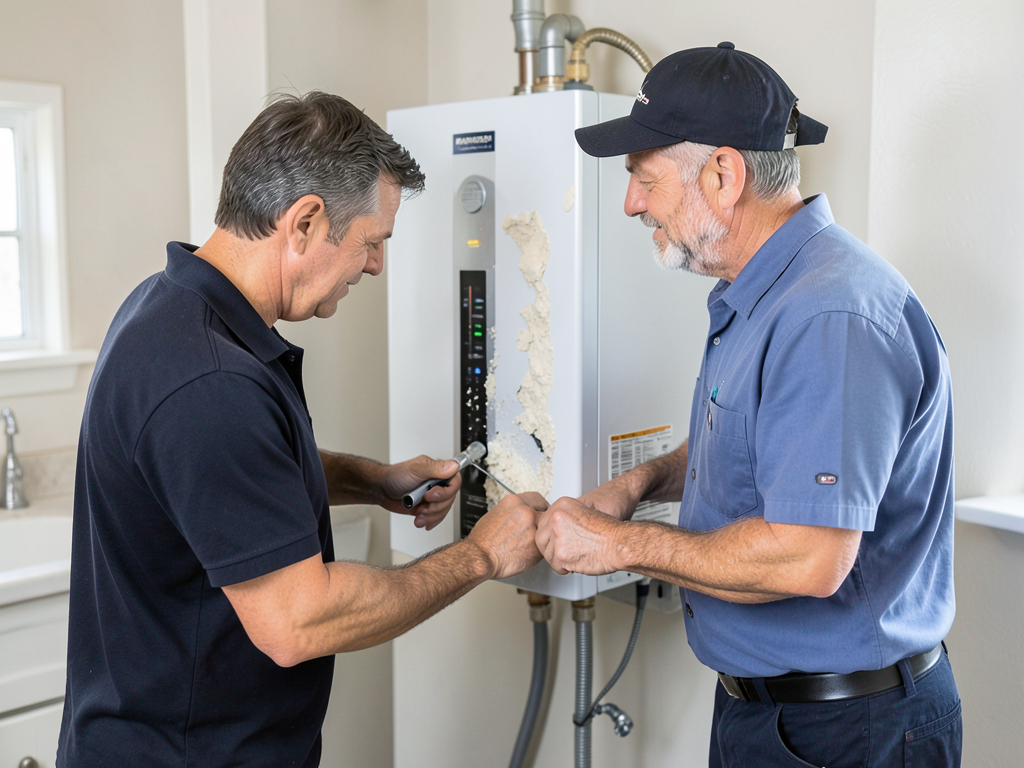
Tankless water heaters typically last 15 to 20 years in Kansas City when properly maintained compared to just 8 to 12 years for traditional tank models. Kansas City’s hard water can cut that lifespan in half if you skip annual maintenance. The limestone-rich Missouri River water creates mineral scale that coats heat exchangers and forces your unit to work harder until it fails. Kansas City Water Services.
With proper care your tankless system can easily hit the 20-year mark and save you thousands in replacement costs. Understanding how Kansas City’s unique water conditions affect your investment is the first step to protecting it. Solving the Unique Plumbing Problems Common in Older Brookside and Waldo Homes.
Why Kansas City’s Water Conditions Matter for Tankless Lifespan
Kansas City’s water hardness averages 8 to 12 grains per gallon which is considered hard to very hard. This mineral content comes from limestone deposits in our water supply and creates scale buildup inside heat exchangers. Every gallon of hot water you use leaves behind microscopic mineral deposits that accumulate over time.
Without regular descaling scale acts like insulation between the burner and the water forcing your unit to burn more gas to achieve the same temperature. This not only increases your utility bills but also accelerates wear on components. The heat exchanger which is the most expensive part to replace typically fails first when scale buildup becomes severe.
Local water quality reports from Kansas City Water Services show that our municipal water contains calcium and magnesium levels that exceed the threshold where scale formation becomes problematic for tankless systems. This makes annual maintenance not optional but essential for protecting your investment. Why Switching to a Tankless Water Heater Makes Sense for Your Kansas City Home.
The Impact of Hard Water on Tankless Heat Exchangers
Heat exchangers in tankless water heaters are precision-engineered copper or stainless steel components that transfer heat from the burner to the water. When mineral scale coats these surfaces thermal efficiency drops by up to 30 percent within just five years of operation in hard water areas.
The scale formation process accelerates in Kansas City because our ground water temperatures hover around 52 to 55 degrees Fahrenheit year-round. This means your tankless unit works harder and longer to heat water creating more mineral precipitation. The constant thermal cycling also stresses metal components leading to premature failure of flow sensors and temperature controls.
Professional-grade tankless units use acid-resistant alloys and larger heat exchanger surfaces to combat scale but even these premium components need annual cleaning. The difference between a well-maintained unit and a neglected one often shows up as a 40 percent increase in gas consumption and a 50 percent reduction in expected lifespan. DIY vs. Professional Drain Cleaning.
Annual Maintenance The Key to Reaching 20+ Years
Annual descaling is the single most important factor in extending tankless water heater life. This process involves circulating a food-grade acid solution through the heat exchanger to dissolve mineral buildup. Most Kansas City homeowners skip this service because they don’t understand how quickly scale forms in our water conditions.
During a professional maintenance visit technicians also check gas pressure inspect venting for proper draft test safety controls and clean the combustion chamber. These steps prevent the cascade of failures that often lead to premature replacement. A neglected unit might fail at year 10 while the same model with annual service routinely hits 20+ years.
The maintenance process takes about 90 minutes and costs significantly less than emergency repairs or early replacement. Think of it like changing your car’s oil skipping it might save you $100 today but costs you $3000 in engine replacement tomorrow.
Tankless vs Traditional The Real Cost Comparison Over Time
While tankless units cost $2000 to $4500 installed compared to $800 to $1500 for traditional tanks the long-term economics strongly favor tankless in Kansas City. Over a 20-year period you’ll replace a traditional tank 2 to 3 times at $1200 each totaling $3600 to $4500 just in equipment costs.
Add in the energy savings tankless units achieve 95 to 98 percent thermal efficiency versus 60 to 70 percent for older tanks and the gap widens further. Kansas City’s average household uses about 60 to 80 gallons of hot water daily making the efficiency difference substantial over two decades.
The maintenance cost for tankless systems averages $150 to $200 annually or $3000 over 20 years. Even with this expense the total cost of ownership still beats traditional tanks when you factor in replacement frequency and energy savings.
| Factor | Tankless (20 Years) | Traditional Tank (20 Years) |
|---|---|---|
| Initial Cost | $2500 – $4500 | $800 – $1500 |
| Replacement Frequency | 1 unit | 2-3 units |
| Energy Efficiency | 95-98% | 60-70% |
| Annual Maintenance | $150-200 | $0 |
| Total 20-Year Cost | $5500 – $8500 | $6000 – $9000 |
Local Warranty Considerations for Kansas City Homeowners
Most tankless manufacturers offer 12 to 15 year warranties on heat exchangers and 5 years on parts when installed by licensed professionals. However these warranties often exclude damage from hard water scale which is precisely the problem Kansas City homeowners face.
Professional installation through licensed Kansas City plumbers includes proper venting gas line sizing to handle the unit’s BTU requirements and compliance with local building codes. DIY or handyman installations frequently violate these requirements voiding warranties and creating safety hazards.
Local contractors also provide labor warranties that cover installation-related issues for 1 to 2 years. This protection matters because improper installation such as inadequate combustion air or incorrect gas pressure can cause premature failure regardless of water quality.
Winter Performance and Ground Water Temperatures
Kansas City’s ground water stays cold year-round averaging 52 to 55 degrees Fahrenheit. This means your tankless unit works at maximum capacity for much of the year especially during winter months when incoming water can drop to 45 degrees.
The constant high-fire operation in cold conditions accelerates wear on gas valves igniters and flow sensors. Units in unconditioned spaces like garages face additional stress from freeze-thaw cycles that can crack heat exchangers if proper freeze protection isn’t installed.
Professional installation includes freeze protection valves and proper insulation of external components. These features are essential for Kansas City’s climate and often overlooked in basic installations.
Choosing the Right Tankless System for Kansas City
Not all tankless units handle hard water equally well. Condensing models with stainless steel heat exchangers resist scale better than non-condensing copper units. These premium systems cost more upfront but pay for themselves through longer life and better efficiency in hard water areas.
Flow rate requirements also matter in Kansas City homes. A typical family needs 6 to 8 gallons per minute to run multiple showers and appliances simultaneously. Undersized units cycle on and off frequently causing additional wear and inconsistent hot water delivery.
Professional load calculations consider your home’s simultaneous hot water needs not just the number of bathrooms. This ensures you get a unit sized for actual usage patterns rather than theoretical maximums.
Warning Signs Your Tankless Unit Needs Attention
Scale buildup often shows up as reduced hot water temperature longer wait times or error codes indicating flow problems. You might notice your unit runs longer to achieve the same temperature or cycles more frequently than when new.
Gas consumption increases as scale forces the unit to work harder. If your utility bills rise without increased usage scale could be the culprit. The unit might also produce unusual noises as mineral deposits break loose and rattle inside the heat exchanger.
Professional diagnosis can determine whether cleaning will restore performance or if replacement is more cost-effective. Early intervention prevents catastrophic failures that leave you without hot water during Kansas City’s cold winters.
ROI Calculation Is Tankless Worth It in Kansas City?
For a typical Kansas City household the return on investment calculation looks like this: Assume $3000 for a mid-range tankless installation $150 annual maintenance and $25 monthly energy savings compared to a traditional tank.
Over 10 years you’d spend $4500 on the tankless system versus $4800 on tank replacements and higher energy costs. The tankless system also avoids the inconvenience and potential water damage from tank failures.
Over 20 years the advantage grows to $2000 to $3000 in net savings not counting the value of avoiding emergency replacements and the consistent performance of a properly maintained system.
Professional Installation Matters More Than You Think
Proper installation affects both performance and longevity. Gas line sizing must handle the unit’s maximum BTU input which can exceed 200000 BTUs for whole-house models. Undersized lines cause pressure drops that trigger safety shutdowns and reduce efficiency.
Venting requirements are also critical. Tankless units produce acidic condensation that requires specific venting materials and routing. Improper venting can lead to corrosion carbon monoxide risks and code violations that complicate future home sales.
Kansas City building codes require permits and inspections for tankless installations. Professional contractors handle this process and ensure compliance with local regulations protecting your investment and your family’s safety.
Extending Your Tankless Life Beyond the Basics
Beyond annual maintenance several practices help maximize tankless longevity. Installing a water softener reduces scale formation dramatically though it adds upfront and ongoing costs. Point-of-use filters protect against sediment that can clog flow sensors and reduce efficiency.
Setting your water temperature to 120 degrees Fahrenheit rather than 140 degrees reduces scale formation and energy consumption while still providing adequate hot water for most household needs. Higher temperatures accelerate mineral precipitation and increase scalding risks.
Using low-flow fixtures reduces the workload on your tankless unit while maintaining comfort. This combination of temperature management and flow reduction can add years to your system’s operational life.
When Replacement Makes More Sense Than Repair
Even with excellent maintenance tankless units eventually reach the end of their service life. Heat exchangers typically last 12 to 15 years before efficiency drops significantly. When repair costs exceed 50 percent of replacement cost or when multiple components fail simultaneously replacement becomes the smarter financial choice.
Technology improvements also factor into replacement timing. Newer units offer better efficiency smart controls and improved reliability. The energy savings from upgrading a 15-year-old unit can offset much of the replacement cost over the remaining expected life.
Professional assessment can help you decide between repair and replacement based on your specific unit’s condition your home’s hot water needs and current energy prices.
Call (816) 473-9233 Today to Protect Your Tankless Investment
Don’t wait until your tankless water heater fails during a Kansas City winter. Annual maintenance is the difference between a system that lasts 20 years and one that fails at 10. Our licensed technicians understand local water conditions and manufacturer requirements to keep your system running efficiently.
We offer comprehensive maintenance plans that include annual descaling safety inspections and priority service. Call (816) 473-9233 today to schedule your inspection or learn more about our tankless water heater services. Protect your investment and ensure reliable hot water for years to come.
Frequently Asked Questions
How often should I descale my tankless water heater in Kansas City?
Annual descaling is recommended for Kansas City’s hard water conditions. Homes with extremely hard water or high usage might need twice-yearly service to prevent scale buildup that reduces efficiency and shortens unit life.
Can I install a tankless water heater myself to save money?
DIY installation voids most manufacturer warranties and often violates local building codes. Tankless units require proper gas line sizing venting and combustion air management that licensed professionals handle. The risks of improper installation far outweigh potential savings.
What’s the difference between condensing and non-condensing tankless units?
Condensing units achieve higher efficiency by capturing heat from exhaust gases and use acid-resistant materials throughout. They perform better in cold climates like Kansas City and resist scale buildup more effectively than non-condensing models though they cost more upfront.
How do I know if my tankless unit needs maintenance?
Signs include reduced hot water temperature longer wait times increased gas bills error codes or unusual noises during operation. Annual professional inspection catches problems before they cause failures but don’t wait for symptoms to appear.
Does a water softener help extend tankless life?
Yes water softeners reduce mineral content that causes scale buildup. While they add cost and maintenance requirements they can double the effective life of your tankless system in hard water areas like Kansas City. For more information, visit Department of Energy tankless water heater guide. For more information, visit National Association of Certified Home Inspectors.
{
“@context”: “https://schema.org”,
“@type”: “BlogPosting”,
“headline”: “How Long Do Tankless Water Heaters Actually Last in the Kansas City Area?”,
“description”: “Kansas City’s hard water cuts tankless water heater life in half without maintenance. Learn how to get 20+ years from your system with proper care.”,
“wordCount”: 2076,
“datePublished”: “2026-05-31T12:31:00.000Z”,
“dateModified”: “2026-05-31T12:31:00.000Z”,
“inLanguage”: “en-US”,
“mainEntityOfPage”: {
“@type”: “WebPage”,
“@id”: “https://silverlineplumbingkansascity.com”
},
“publisher”: {
“@type”: “LocalBusiness”,
“name”: “Silverline Plumbing Kansas City”,
“url”: “https://silverlineplumbingkansascity.com”
},
“author”: {
“@type”: “Organization”,
“name”: “Silverline Plumbing Kansas City”,
“url”: “https://silverlineplumbingkansascity.com”
},
“image”: {
“@type”: “ImageObject”,
“url”: “https://silverlineplumbingkansascity.com/wp-content/uploads/2026/03/how-long-do-tankless-water-heaters-actually-last-i-1.png”
}
}
{
“@context”: “https://schema.org”,
“@type”: “Plumber”,
“name”: “Silverline Plumbing Kansas City”,
“url”: “https://silverlineplumbingkansascity.com”,
“address”: {
“@type”: “PostalAddress”,
“addressLocality”: “Kansas City”
},
“areaServed”: {
“@type”: “City”,
“name”: “Kansas City”
}
}
{
“@context”: “https://schema.org”,
“@type”: “FAQPage”,
“mainEntity”: [
{
“@type”: “Question”,
“name”: “ROI Calculation Is Tankless Worth It in Kansas City?”,
“acceptedAnswer”: {
“@type”: “Answer”,
“text”: “For a typical Kansas City household the return on investment calculation looks like this: Assume $3000 for a mid-range tankless installation $150 annual maintenance and $25 monthly energy savings compared to a traditional tank.”
}
},
{
“@type”: “Question”,
“name”: “How often should I descale my tankless water heater in Kansas City?”,
“acceptedAnswer”: {
“@type”: “Answer”,
“text”: “Annual descaling is recommended for Kansas City’s hard water conditions. Homes with extremely hard water or high usage might need twice-yearly service to prevent scale buildup that reduces efficiency and shortens unit life.”
}
},
{
“@type”: “Question”,
“name”: “Can I install a tankless water heater myself to save money?”,
“acceptedAnswer”: {
“@type”: “Answer”,
“text”: “DIY installation voids most manufacturer warranties and often violates local building codes. Tankless units require proper gas line sizing venting and combustion air management that licensed professionals handle. The risks of improper installation far outweigh potential savings.”
}
},
{
“@type”: “Question”,
“name”: “What’s the difference between condensing and non-condensing tankless units?”,
“acceptedAnswer”: {
“@type”: “Answer”,
“text”: “Condensing units achieve higher efficiency by capturing heat from exhaust gases and use acid-resistant materials throughout. They perform better in cold climates like Kansas City and resist scale buildup more effectively than non-condensing models though they cost more upfront.”
}
},
{
“@type”: “Question”,
“name”: “How do I know if my tankless unit needs maintenance?”,
“acceptedAnswer”: {
“@type”: “Answer”,
“text”: “Signs include reduced hot water temperature longer wait times increased gas bills error codes or unusual noises during operation. Annual professional inspection catches problems before they cause failures but don’t wait for symptoms to appear.”
}
}
]
}
{
“@context”: “https://schema.org”,
“@type”: “BreadcrumbList”,
“itemListElement”: [
{
“@type”: “ListItem”,
“position”: 1,
“name”: “Home”,
“item”: “https://silverlineplumbingkansascity.com”
},
{
“@type”: “ListItem”,
“position”: 2,
“name”: “Blog”,
“item”: “https://silverlineplumbingkansascity.com/blog”
},
{
“@type”: “ListItem”,
“position”: 3,
“name”: “How Long Do Tankless Water Heaters Actually Last in the Kansas City Area?”
}
]
}
{
“@context”: “https://schema.org”,
“@type”: “Service”,
“serviceType”: “Plumbing”,
“provider”: {
“@type”: “LocalBusiness”,
“name”: “Silverline Plumbing Kansas City”,
“url”: “https://silverlineplumbingkansascity.com”
},
“areaServed”: {
“@type”: “City”,
“name”: “Kansas City”
},
“description”: “Kansas City’s hard water cuts tankless water heater life in half without maintenance. Learn how to get 20+ years from your system with proper care.”
}