
Switching from Electric to a Gas Range? How to Safely Route Gas Lines in Your Belton Kitchen
Converting your kitchen from electric to gas in Belton means more than just swapping appliances. It requires careful planning, proper permits, and strict adherence to local safety codes. This guide explains what you need to know before making the switch, including how to calculate BTU loads, what type of piping to use, and why hiring a licensed professional is essential for your family’s safety. DIY vs. Professional Drain Cleaning.
Why Professional Gas Line Installation is Critical for Belton Homeowners
Belton homes built before 2000 often have aging electrical panels that struggle with high-demand appliances. While switching to a gas range might seem like a simple upgrade, it introduces new risks. Gas leaks can lead to explosions or carbon monoxide poisoning. Missouri’s International Fuel Gas Code (IFGC) requires licensed professionals to handle gas line installations. A single mistake in threading, pressure testing, or shut-off valve placement can create a deadly hazard. International Fuel Gas Code (IFGC).
Local soil conditions in Belton also matter. The area’s clay-heavy soil expands and contracts with moisture changes, which can stress underground gas lines over time. Professional installers account for these factors by using proper burial depths and flexible connections where code allows.
Understanding BTU Load Calculations for Your New Gas Range
Before installing any gas line, you need to know if your home’s existing gas system can handle the additional load. Gas ranges typically require between 30,000 and 60,000 BTUs per hour. Your home’s gas meter and supply lines have maximum capacity ratings. Exceeding these limits can cause poor appliance performance or dangerous pressure drops.
A licensed plumber calculates your total BTU demand by adding up all gas appliances: furnace, water heater, dryer, fireplace, and the new range. If your system falls short, you may need a meter upgrade from Spire Energy or a dedicated line from the main supply. This calculation isn’t optional—it’s required by the IFGC and local Belton building permits. Spire Energy service requirements.
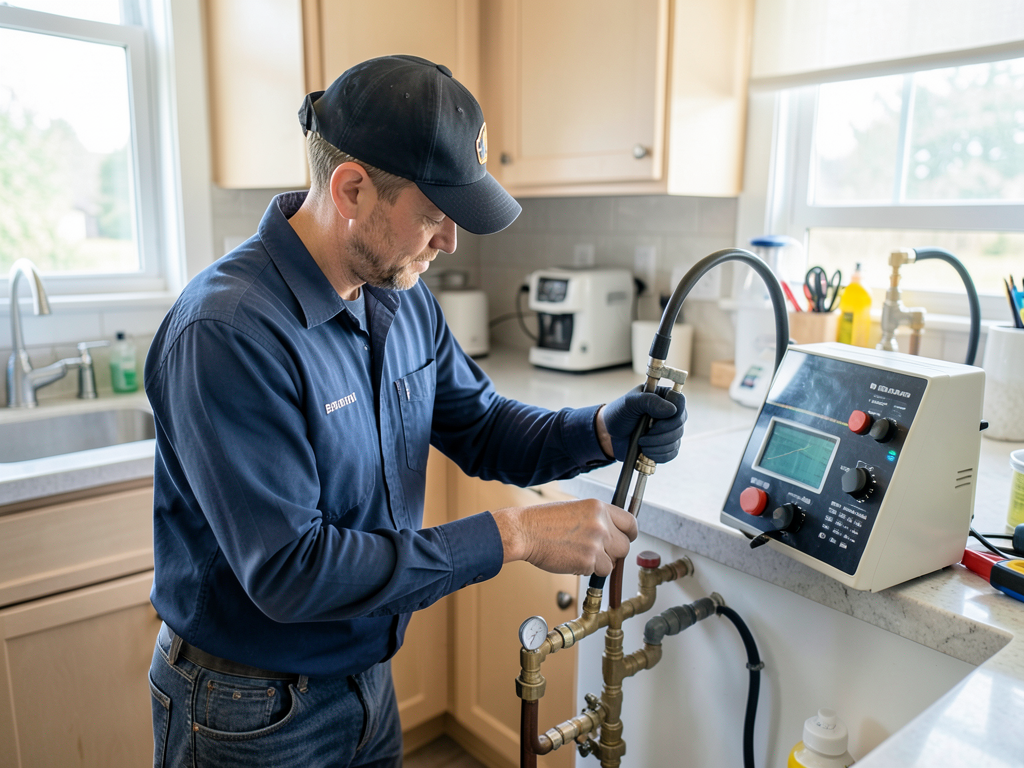
Image: Professional plumber using a manometer to test gas line pressure during installation in a Belton kitchen.
Choosing Between CSST and Black Iron Pipe for Your Belton Home
Two main materials work for gas line installation: Corrugated Stainless Steel Tubing (CSST) and black iron pipe. Each has advantages depending on your home’s construction and local conditions.
| Material | Installation Speed | Cost per Foot | Best Use Case |
|---|---|---|---|
| CSST | Fast (flexible routing) | $2-$4 | New construction, tight spaces |
| Black Iron | Slower (requires threading) | $1.50-$3 | Exposed runs, heavy-duty applications |
CSST works well in Belton’s older homes where running rigid pipe through walls would require extensive demolition. However, CSST requires proper bonding to prevent lightning damage—a requirement often overlooked in DIY installations. Black iron pipe offers superior durability for exposed basement runs but demands precise threading and leak testing. Keep Your Olathe Basement Dry with Reliable Sump Pump Repair and Maintenance.
Step-by-Step Gas Line Installation Process for Belton Kitchens
- Permit Acquisition
Submit gas line plans to Belton Building Department. Include BTU calculations and material specifications. Permits typically cost $75-$150.
- System Assessment
Verify existing gas supply capacity. Check meter size and regulator function. Identify optimal routing path.
- Material Selection
Choose CSST or black iron based on routing requirements and local code compliance.
- Line Installation
Run new line from main supply to appliance location. Maintain proper slope for sediment traps.
- Shut-off Valve Installation
Install accessible shut-off valve within 6 feet of appliance per IFGC 403.9 requirements.
- Pressure Testing
Pressurize line to 1.5x working pressure. Hold for 15 minutes minimum. Check for pressure drop.
- Final Inspection
Schedule city inspection before covering any work. Inspector verifies code compliance.
- Appliance Connection
Install flexible connector and sediment trap. Connect range and test all burners.
Understanding Gas Pressure Testing Requirements
Gas pressure testing isn’t optional—it’s the only way to verify your installation is leak-free. The test uses a manometer to measure pressure changes over time. A properly installed line holds pressure within 0.5 PSI for 15 minutes. Any drop indicates a leak that must be located and repaired.
In Belton, pressure testing must meet IFGC Chapter 4 requirements. The test pressure equals 1.5 times the maximum working pressure, typically 7 inches water column for residential gas. This translates to approximately 0.25 PSI test pressure. Many DIYers skip this step, creating invisible hazards that can persist for years.
Shut-off Valve Location Regulations in Belton
IFGC Section 403.9 mandates specific shut-off valve placement. The valve must be within 6 feet of the appliance and in the same room. It cannot be located where it requires moving the appliance to access. For ranges, this usually means installing the valve in the cabinet next to the stove or in an adjacent accessible space.
Belton inspectors check valve accessibility during final inspections. Hidden or hard-to-reach valves constitute code violations. Some homeowners attempt to hide valves inside walls or under flooring—a practice that fails inspection and creates safety hazards during emergencies.
Coordinating with Spire Energy for Meter Upgrades
If your BTU calculations show your existing meter can’t handle the new load, you’ll need Spire Energy’s involvement. They assess your service line capacity and may require a meter upgrade from 250 CFH to 1,000 CFH or larger. This process typically takes 5-10 business days and requires a city permit before they’ll schedule service. Upgrade Your Prairie Village Home with a Professional Low-Flow Toilet Installation.
Spire Energy also inspects their service line connections. They won’t activate new service if they find improper fittings, missing dielectric unions, or inadequate support. This coordination between plumber, city inspector, and utility provider is why DIY gas work often fails at the final hurdle.
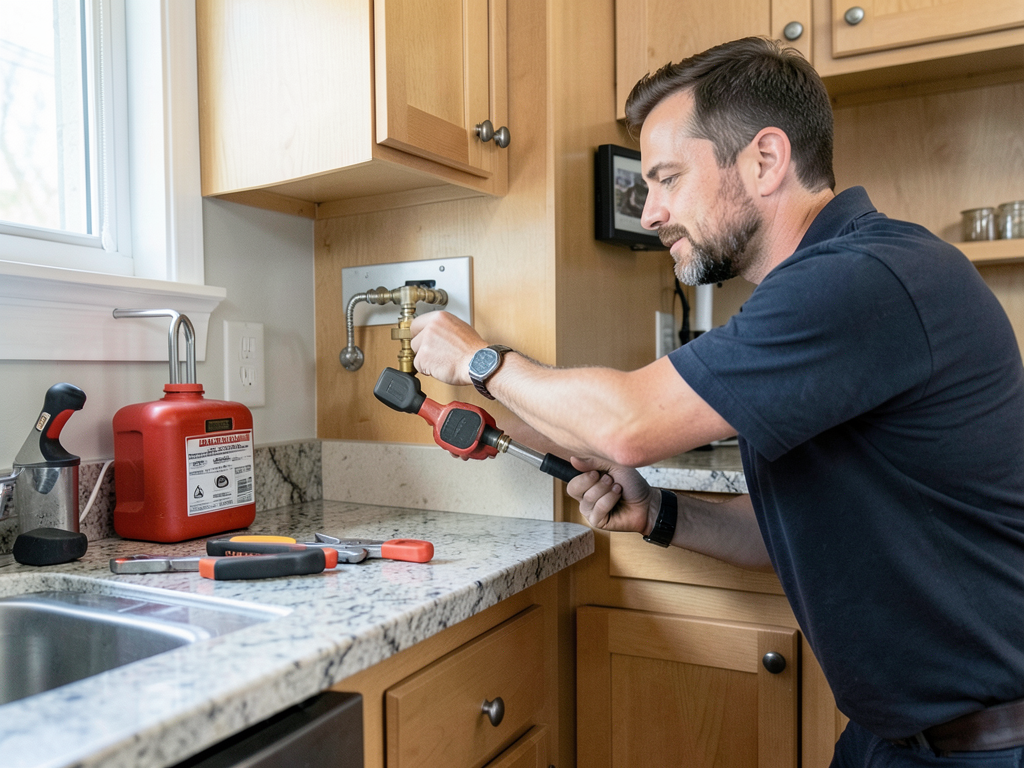
Image: Licensed plumber installing a gas shut-off valve in a Belton kitchen cabinet, demonstrating proper accessibility and code compliance.
Common Mistakes That Lead to Failed Inspections
Belton inspectors frequently flag these issues during gas line inspections:
- Missing sediment traps (drip legs) at appliance connections
- Improper pipe support spacing (supports needed every 6 feet for horizontal runs)
- Incorrect thread sealant (only approved gas-rated tape or compound)
- Lack of proper bonding for CSST installations
- Shut-off valves installed behind appliances or in inaccessible locations
- Pressure testing without proper documentation
Even if your installation works initially, these code violations can cause problems when selling your home or filing insurance claims after incidents.
Appliance Connector Safety Standards
The flexible connector between your range and the gas line must meet ANSI Z21.24 standards. These connectors have maximum length restrictions—typically 3 feet for most residential applications. Longer connectors can create pressure drop issues and violate code.
Connectors must be new with each installation. Reusing old connectors is illegal and dangerous. The connector should have a visible tag showing certification and maximum BTU rating. Using an undersized connector can starve your range of gas, causing poor performance and potential safety issues.
Cost Factors for Gas Line Installation in Belton
Several variables affect your total installation cost:
- Line length: Longer runs require more materials and labor
- Material choice: CSST typically costs more per foot but installs faster
- Access difficulty: Running lines through finished walls increases labor time
- Permit fees: Belton charges $75-$150 for gas line permits
- Utility coordination: Spire Energy fees for meter upgrades vary by capacity
While DIY might seem cheaper initially, the cost of failed inspections, repairs, and potential liability far exceeds professional installation fees. Most licensed plumbers in Belton charge $800-$2,500 for complete gas line installation, depending on complexity.
Why DIY Gas Work is Dangerous and Illegal in Missouri
Missouri law requires licensed plumbers to handle gas line installations. Insurance companies often deny claims for damage caused by unlicensed gas work. If a leak causes injury or property damage, you could face criminal negligence charges.
Beyond legal issues, DIY gas work lacks proper testing equipment. Most homeowners don’t own manometers or combustible gas detectors. They can’t verify their work meets code requirements or performs safely under all conditions. Professional plumbers carry liability insurance and stand behind their work with warranties.
Frequently Asked Questions
How long does gas line installation take?
Most residential installations complete in one day. Complex projects requiring meter upgrades or extensive routing may take 2-3 days total, including inspection time.
Do I need a permit for gas line installation?
Yes. Belton requires permits for all gas line work. The permit ensures your installation meets IFGC requirements and passes inspection before use.
Can I install a gas line myself if I’m handy?
No. Missouri law requires licensed professionals for gas line work. DIY installations violate code and can void insurance coverage.
What happens if my inspection fails?
The inspector provides a written list of violations. You must correct these issues and schedule a re-inspection. Failed inspections delay your project and increase costs.
How do I know if my home can support a gas range?
A licensed plumber calculates your total BTU load and compares it to your system’s capacity. This assessment determines if upgrades are needed before installation.
Image: Completed gas line installation showing proper support, sediment trap, and shut-off valve installation in a Belton kitchen.
Ready to Make the Switch? Call (816) 473-9233 Today
Switching from electric to gas in your Belton kitchen requires expertise, proper permits, and strict code compliance. Don’t risk your family’s safety with DIY installations or unlicensed contractors. Our licensed plumbers handle everything from BTU calculations to final inspections, ensuring your new gas range operates safely and efficiently. Why Switching to a Tankless Water Heater Makes Sense for Your Kansas City Home.
Call (816) 473-9233 today to schedule your gas line consultation. We’ll assess your home’s capacity, explain your options, and provide a clear quote before any work begins. Your kitchen upgrade should add value and convenience—not create hazards. Let’s make it happen safely.
Pick up the phone and call (816) 473-9233 now. Your safe kitchen upgrade starts with one call.
Service Area: Belton, MO and surrounding Cass County communities including Grandview, Raymore, and Lee’s Summit.
You may also find this helpful. Why Your Historic Valentine Home Needs a Specialized Boiler Tune-Up Every Fall.
{
“@context”: “https://schema.org”,
“@type”: “BlogPosting”,
“headline”: “Switching from Electric to a Gas Range? How to Safely Route Gas Lines in Your Belton Kitchen”,
“description”: “Thinking about switching to a gas range in Belton? Learn about safe gas line installation, local codes, BTU calculations, and why DIY is dangerous. Call (816) 473-9233.”,
“wordCount”: 1650,
“datePublished”: “2026-03-27T12:17:00.000Z”,
“dateModified”: “2026-03-27T12:17:00.000Z”,
“inLanguage”: “en-US”,
“mainEntityOfPage”: {
“@type”: “WebPage”,
“@id”: “https://silverlineplumbingkansascity.com”
},
“publisher”: {
“@type”: “LocalBusiness”,
“name”: “Silverline Plumbing Kansas City”,
“url”: “https://silverlineplumbingkansascity.com”
},
“author”: {
“@type”: “Organization”,
“name”: “Silverline Plumbing Kansas City”,
“url”: “https://silverlineplumbingkansascity.com”
},
“image”: {
“@type”: “ImageObject”,
“url”: “https://silverlineplumbingkansascity.com/wp-content/uploads/2026/03/switching-from-electric-to-a-gas-range-how-to-safe-1.png”
}
}
{
“@context”: “https://schema.org”,
“@type”: “Plumber”,
“name”: “Silverline Plumbing Kansas City”,
“url”: “https://silverlineplumbingkansascity.com”,
“address”: {
“@type”: “PostalAddress”,
“addressLocality”: “Kansas City”
},
“areaServed”: {
“@type”: “City”,
“name”: “Kansas City”
}
}
{
“@context”: “https://schema.org”,
“@type”: “FAQPage”,
“mainEntity”: [
{
“@type”: “Question”,
“name”: “How long does gas line installation take?”,
“acceptedAnswer”: {
“@type”: “Answer”,
“text”: “Most residential installations complete in one day. Complex projects requiring meter upgrades or extensive routing may take 2-3 days total, including inspection time.”
}
},
{
“@type”: “Question”,
“name”: “Do I need a permit for gas line installation?”,
“acceptedAnswer”: {
“@type”: “Answer”,
“text”: “Yes. Belton requires permits for all gas line work. The permit ensures your installation meets IFGC requirements and passes inspection before use.”
}
},
{
“@type”: “Question”,
“name”: “Can I install a gas line myself if I’m handy?”,
“acceptedAnswer”: {
“@type”: “Answer”,
“text”: “No. Missouri law requires licensed professionals for gas line work. DIY installations violate code and can void insurance coverage.”
}
},
{
“@type”: “Question”,
“name”: “What happens if my inspection fails?”,
“acceptedAnswer”: {
“@type”: “Answer”,
“text”: “The inspector provides a written list of violations. You must correct these issues and schedule a re-inspection. Failed inspections delay your project and increase costs.”
}
},
{
“@type”: “Question”,
“name”: “How do I know if my home can support a gas range?”,
“acceptedAnswer”: {
“@type”: “Answer”,
“text”: “A licensed plumber calculates your total BTU load and compares it to your system’s capacity. This assessment determines if upgrades are needed before installation.”
}
}
]
}
{
“@context”: “https://schema.org”,
“@type”: “HowTo”,
“name”: “Gas Line Installation Process”,
“step”: [
{
“@type”: “HowToStep”,
“position”: 1,
“name”: “Permit Acquisition”,
“text”: “Submit gas line plans to Belton Building Department. Include BTU calculations and material specifications. Permits typically cost $75-$150.”
},
{
“@type”: “HowToStep”,
“position”: 2,
“name”: “System Assessment”,
“text”: “Verify existing gas supply capacity. Check meter size and regulator function. Identify optimal routing path.”
},
{
“@type”: “HowToStep”,
“position”: 3,
“name”: “Material Selection”,
“text”: “Choose CSST or black iron based on routing requirements and local code compliance.”
},
{
“@type”: “HowToStep”,
“position”: 4,
“name”: “Line Installation”,
“text”: “Run new line from main supply to appliance location. Maintain proper slope for sediment traps.”
},
{
“@type”: “HowToStep”,
“position”: 5,
“name”: “Shut-off Valve Installation”,
“text”: “Install accessible shut-off valve within 6 feet of appliance per IFGC 403.9 requirements.”
},
{
“@type”: “HowToStep”,
“position”: 6,
“name”: “Pressure Testing”,
“text”: “Pressurize line to 1.5x working pressure. Hold for 15 minutes minimum. Check for pressure drop.”
},
{
“@type”: “HowToStep”,
“position”: 7,
“name”: “Final Inspection”,
“text”: “Schedule city inspection before covering any work. Inspector verifies code compliance.”
},
{
“@type”: “HowToStep”,
“position”: 8,
“name”: “Appliance Connection”,
“text”: “Install flexible connector and sediment trap. Connect range and test all burners.”
}
],
“image”: “https://silverlineplumbingkansascity.com/wp-content/uploads/2026/03/switching-from-electric-to-a-gas-range-how-to-safe-1.png”
}
{
“@context”: “https://schema.org”,
“@type”: “BreadcrumbList”,
“itemListElement”: [
{
“@type”: “ListItem”,
“position”: 1,
“name”: “Home”,
“item”: “https://silverlineplumbingkansascity.com”
},
{
“@type”: “ListItem”,
“position”: 2,
“name”: “Blog”,
“item”: “https://silverlineplumbingkansascity.com/blog”
},
{
“@type”: “ListItem”,
“position”: 3,
“name”: “Switching from Electric to a Gas Range? How to Safely Route Gas Lines in Your Belton Kitchen”
}
]
}
{
“@context”: “https://schema.org”,
“@type”: “Service”,
“serviceType”: “Plumbing”,
“provider”: {
“@type”: “LocalBusiness”,
“name”: “Silverline Plumbing Kansas City”,
“url”: “https://silverlineplumbingkansascity.com”
},
“areaServed”: {
“@type”: “City”,
“name”: “Kansas City”
},
“description”: “Thinking about switching to a gas range in Belton? Learn about safe gas line installation, local codes, BTU calculations, and why DIY is dangerous. Call (816) 473-9233.”
}